Stargazing Secrets: Mastering Night Photography in Namibia’s Quiver Tree Forest
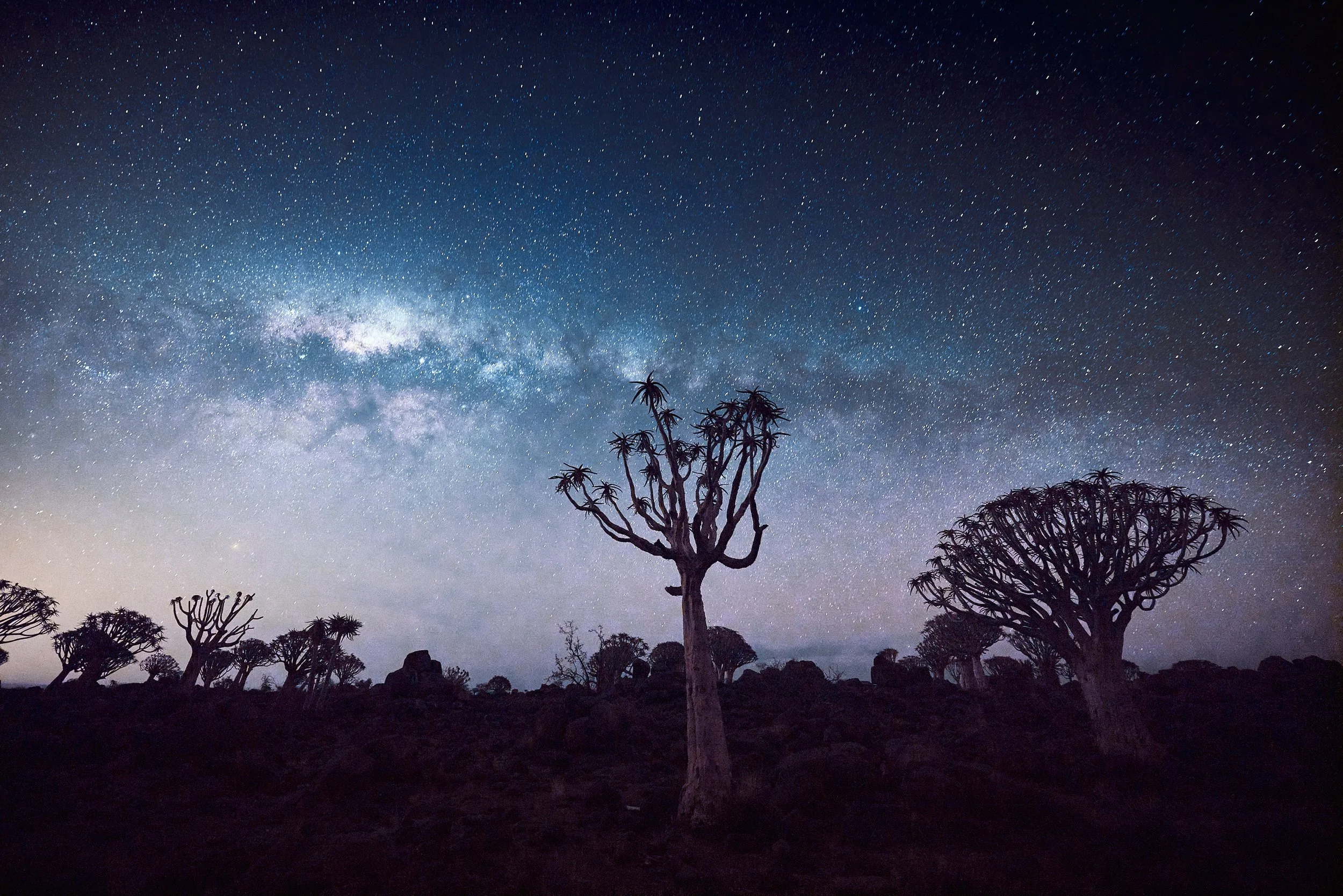
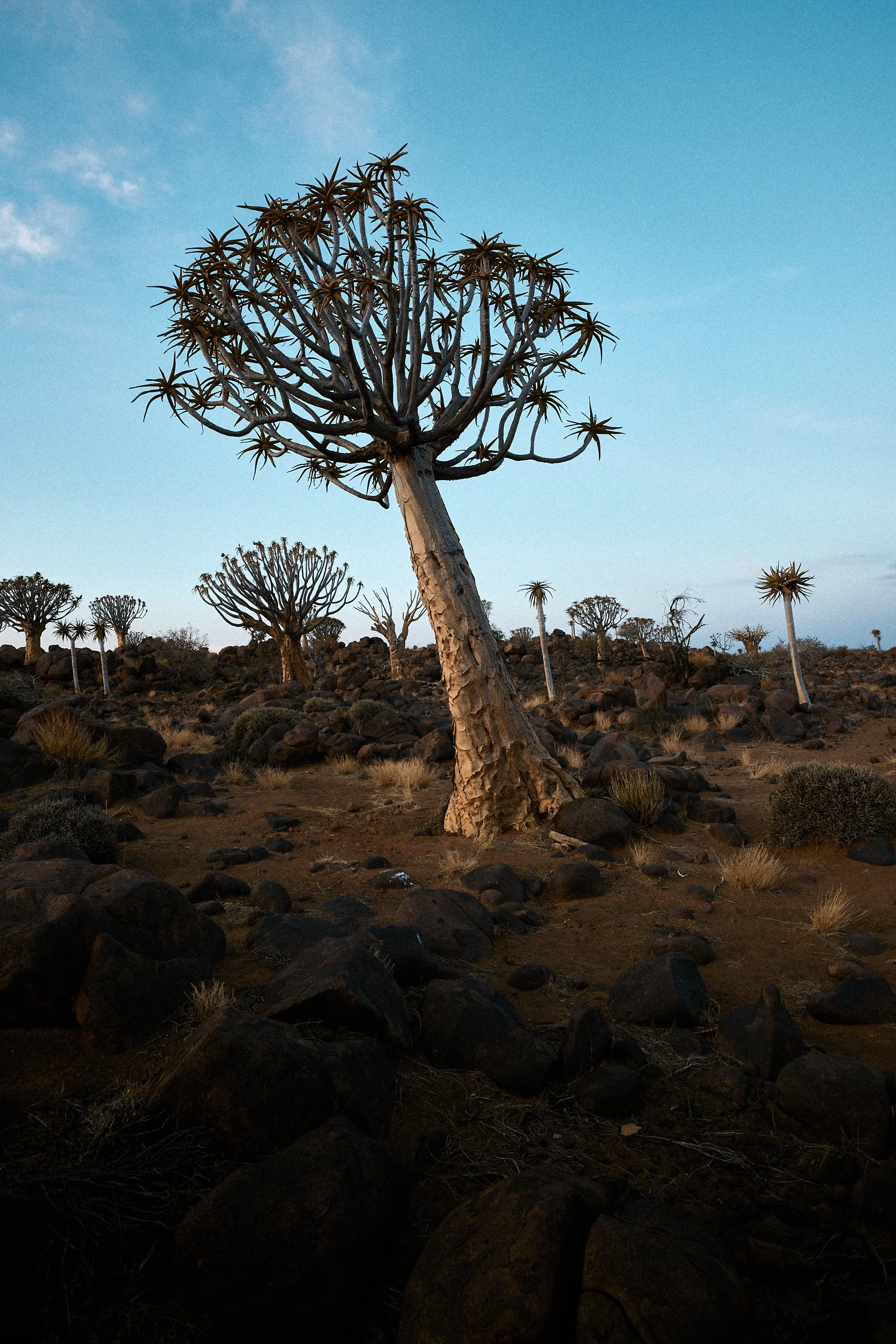
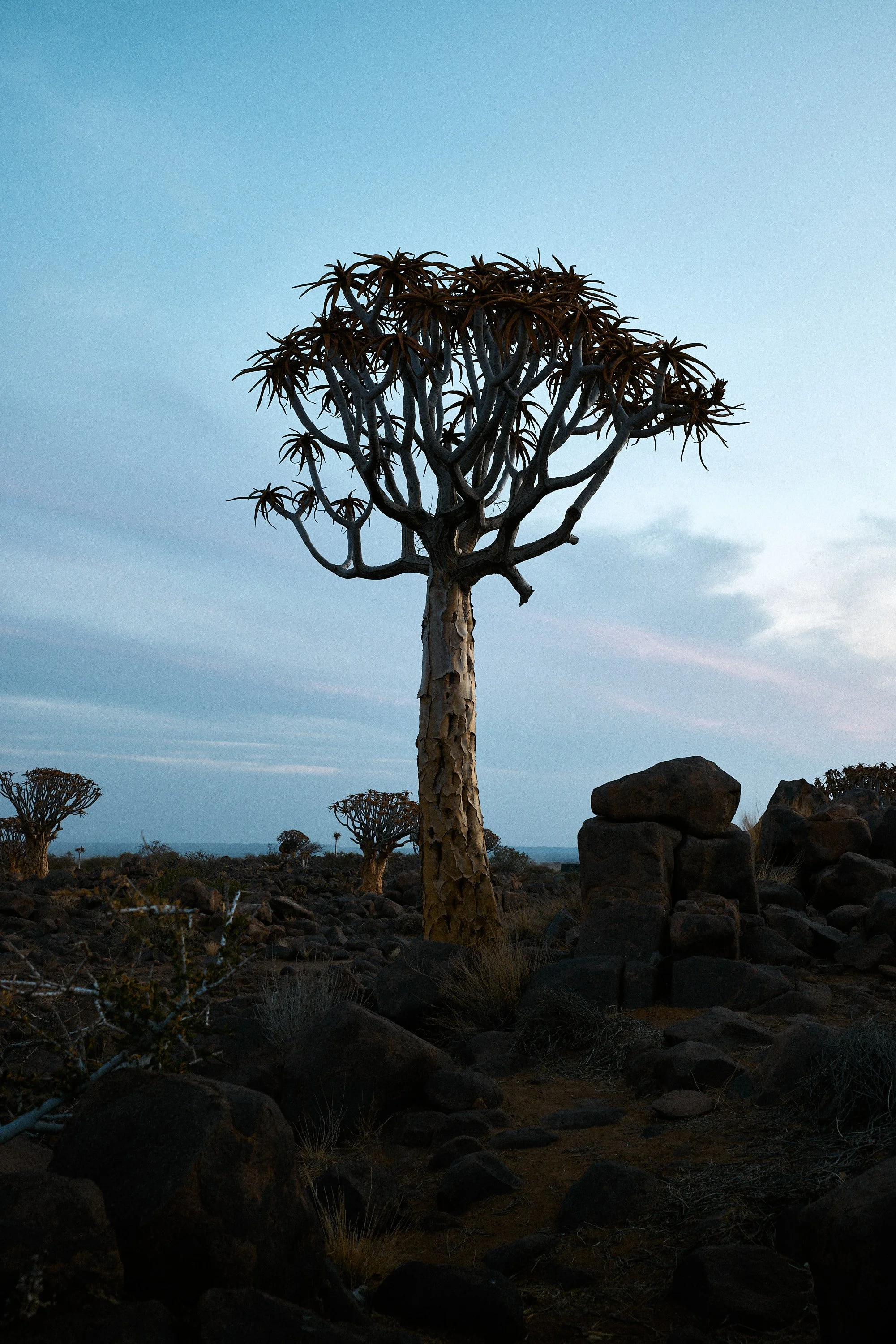
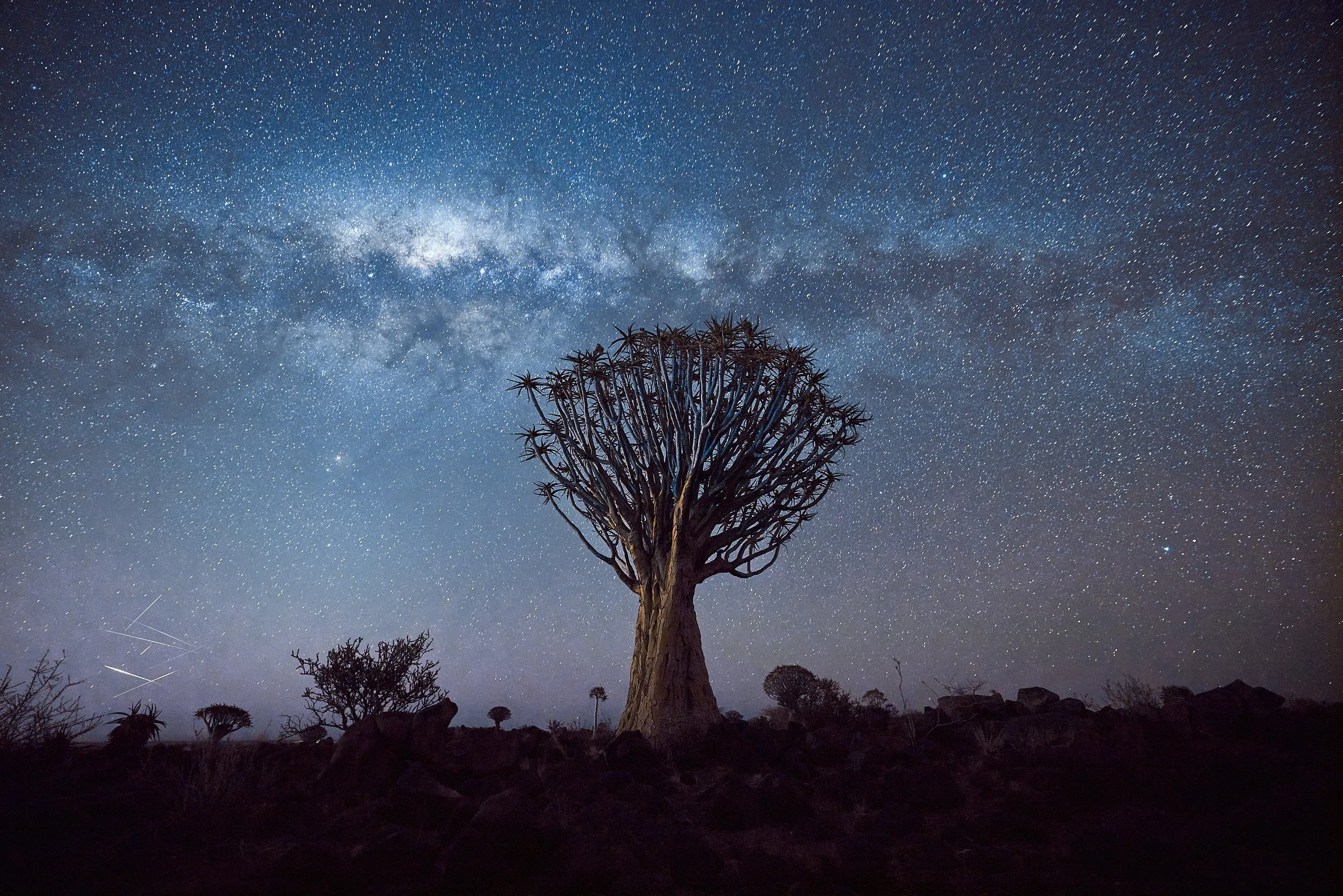
The quiver tree forest near Keetmanshoop is the kind of place you need to experience with all five senses. By day the sculptural limbs of Aloe dichotoma glow like copper in the golden light, their forked branches twisting toward a cloudless sky. By night those same trunks become dark silhouettes against a tapestry of stars. The San people once hollowed these trees to make quivers for their arrows, and many specimens are believed to be up to three centuries old . Standing among them after sunset is humbling. It isn’t just a spectacle; it’s a dialogue with time.
But how do we photograph it?
Reading the Landscape
Getting to this remote grove is part of the adventure. Located roughly 495 km south of Windhoek, the forest sits on private land that welcomes respectful visitors . The drive is long but rewarding; open semi-desertic plains give way to rocky plains dotted with aloes. When you arrive, take time to walk slowly through the grove in daylight. Notice the varied heights of the trees, the texture of their bark and how the trunks split into multiple branches. These observations will inform your compositions later after the light fades.
The quiver tree is actually a species of aloe that can live 200–300 years . During the day, photograph the trunks at golden hour when low sun angles create dramatic shadows. This is also the time to scout for foreground subjects and interesting juxtapositions: perhaps a lone tree aligned with a distant ridge or a cluster of trunks that frame the horizon. The late-afternoon light warms the pale bark and brings out the ochre hues of the surrounding gravel plain .
Planning for a Night Under the Stars
The Namibian winter (May–September) offers the clearest skies and milder temperatures for night photography. In these months the Milky Way stretches high across the southern sky soon after dark. A sturdy tripod is essential to hold the camera steady during multi‑second exposures. Fast wide‑angle lenses (f/1.4–f/2.8) help capture faint starlight and allow you to stop down slightly for greater depth of field. In my Nikon years, in a time when ISO performance was not as good as now, my go-to were 24mm f/1.4 or a 14mm f/1.4; in both cases I had plenty of aperture available so to keep ISO relatively low. Today, with Canon R5 or R3, I use the 15-35mm f/2.8. The smaller aperture requires ISO to be a bit higher (often in the 8000-10000 range) but between sensor performance and AI noise reduction tools, that’s not too much of a problem.
It’s also wise to bring some extra batteries: long exposures drain power quickly .
Arrive before sunset to set up while there is still light. Walk the area to choose compositions: look for trees that lean toward each other or isolated specimens you can silhouette against the arch of the Milky Way. Remember that the brightest part of the Milky Way will move over the course of the night, so orient your camera accordingly. Because there are no artificial lights nearby, you’ll enjoy true dark‑sky conditions . To avoid the pale glow of a waxing moon washing out the stars, schedule your shoot within a few days of the new moon.
That’s what we do in my Iconic Namibia and Adventure Namibia workshops. Both are scheduled every time around moon phase so that we can get the best conditions for night photography in places like Quiver Tree Forest or Spitzkoppe. If you’re curious, you can find the full itineraries here.
Composing With Light and Shadow
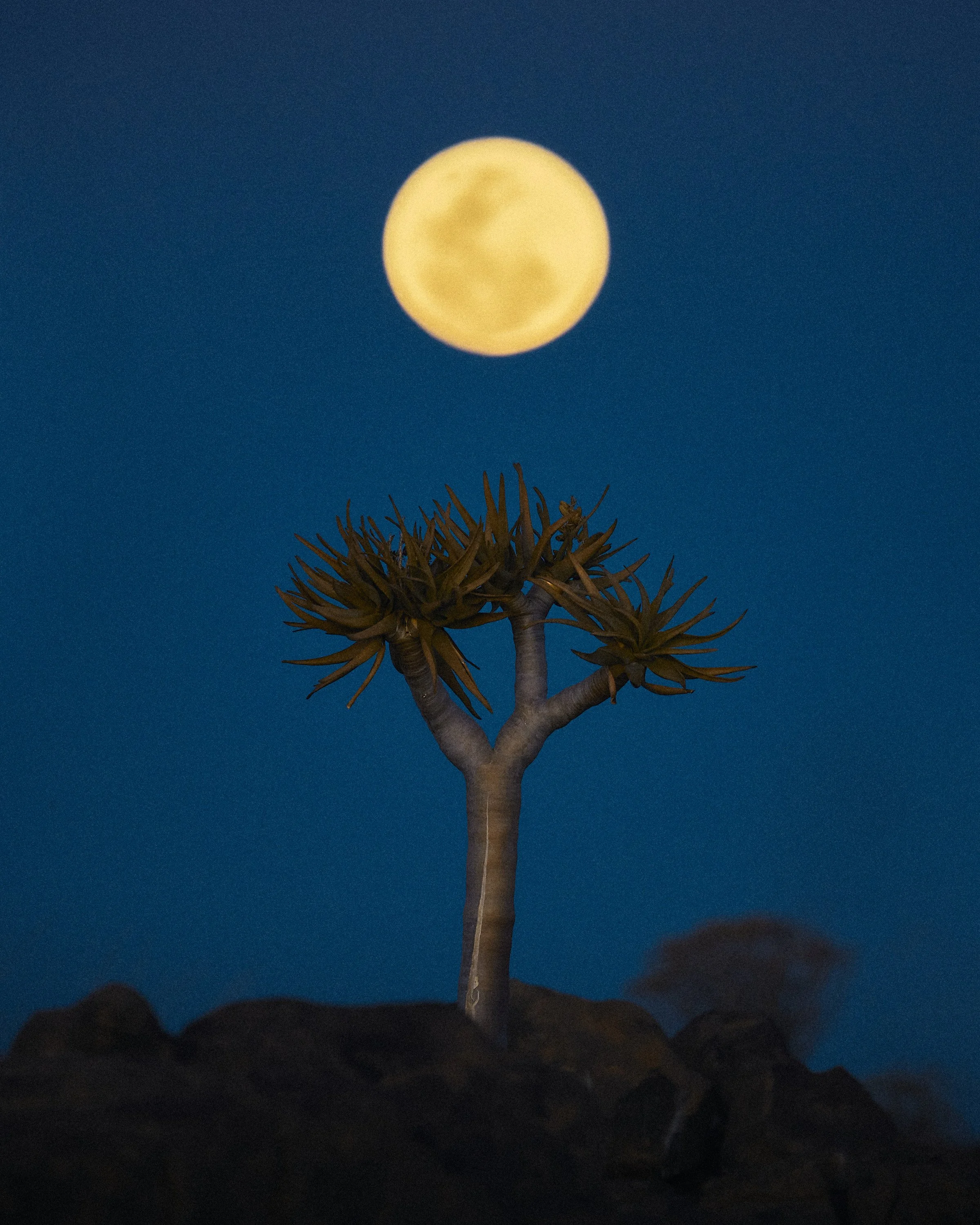
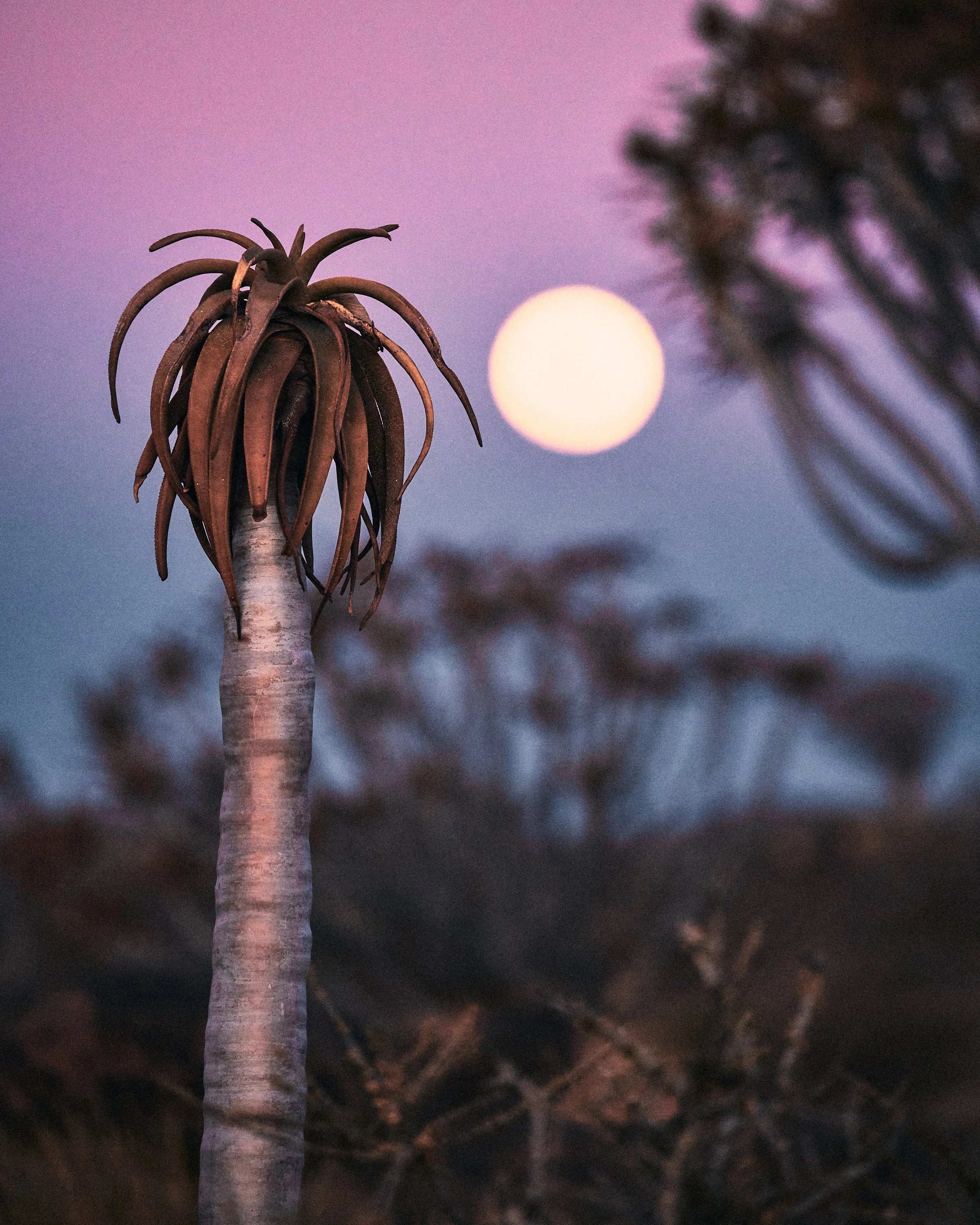
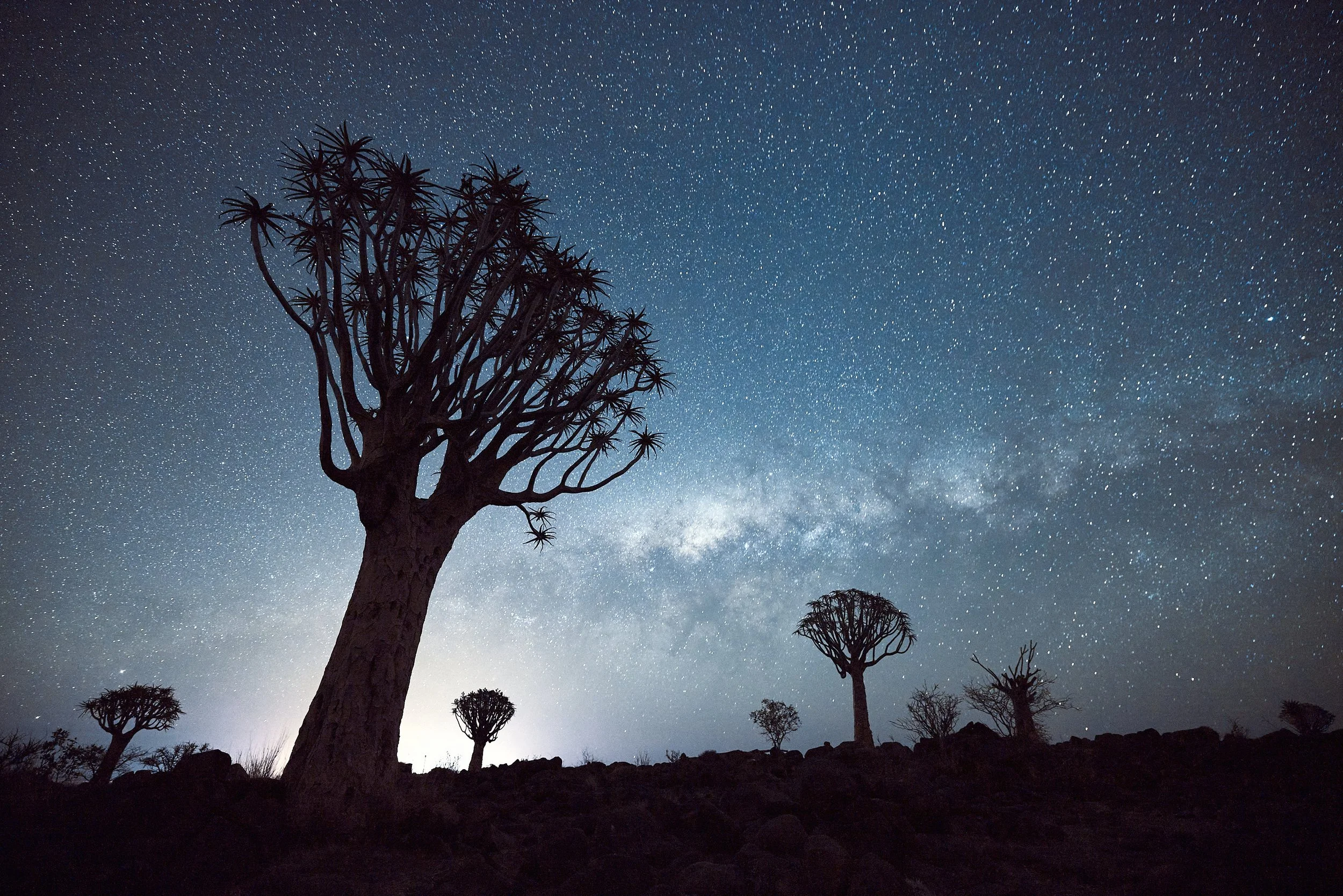
Quiver trees make powerful foreground subjects because of their distinctive branching patterns. During blue hour, when residual twilight paints the sky a deep indigo, try back‑lighting the trees so the branches form intricate silhouettes. As full darkness falls, experiment with low‑level lighting - using a headlamp with a red filter or a dim LED panel - to gently illuminate the trunks without overpowering the stars. Position the light source off to the side to emphasize texture and avoid flat lighting.
If you did your homework and planned the trip around new moon, you can capture the Milky Way arching over the grove. Compose wide to include several trees while ensuring the core of the galaxy doesn’t exit the frame. A typical starting point is 20 seconds at f/2.8 and ISO 6400, but adjust depending on your lens and camera. The red glow on the horizon is often the town of Keetmanshoop; embrace this natural backlight rather than fighting it. An ultra‑wide lens will exaggerate the sweep of the sky, but don’t be afraid to switch to a normal or short telephoto lens for more intimate frames.
Respecting the Environment
Photography in wild places is always a privilege, never a right. Stay on established paths to protect the delicate desert soil. Avoid touching the trees; their bark may look robust but can be damaged by repeated contact. Use red or dim lights to preserve night vision and minimize disturbance to other photographers. Remember that these trees have stood here through countless seasons; our presence should leave no trace. As the brand ethos states: “Let the wild breathe.”
Beyond the Image
What sets great night photographs apart is the intention behind them. As you stand in the silent dark, listen for the subtle sounds of the desert—the distant bark of a gecko, the whisper of the wind. Pause between exposures to let your eyes adjust; a shooting star or passing satellite may surprise you. When you review your images later, you’ll notice that the best frames are those where your sense of wonder translated into careful composition and technical precision. Night photography here isn’t just about sharp stars; it’s about conveying the serenity and scale of this ancient landscape.
Photographing the quiver trees under the Namibian sky is a lesson in patience and presence. Take time to scout, plan, and respect the environment. Embrace the technological challenges as part of the adventure and remember that the reward is not just a portfolio of stunning images, but a deeper connection to a landscape shaped by centuries. If you found these insights useful and want to continue refining your craft, sign up for my newsletter for weekly tips straight in your inbox. And if you dream of joining me under this very sky, consider one of my in‑person workshops where we spend a night among the quiver trees, learning and listening together.