
Top Gear Breakdown: Best Wildlife Lenses of 2026
The craft of wildlife photography has never been about the latest technology. A keen eye and an understanding of animal behaviour will always trump chasing every new release. But good tools help us translate moments into images with greater fidelity. For 2026, several lenses stand out not as status symbols but as thoughtfully engineered instruments that complement fieldcraft. Here is a breakdown of some of the most compelling options and why they might deserve a place in your kit.
Canon RF 200–800 mm f/6.3–9 IS USM — reach for the dedicated observer
For Canon RF shooters who want massive reach without stepping into the stratospheric prices of super‑tele primes, the recently released RF 200–800 mm f/6.3–9 IS USM is the most versatile native option . Its focal range extends from a respectable 200 mm all the way to 800 mm, giving you the flexibility to frame a feeding deer at 200 mm or a soaring eagle at 800 mm. Reviewers praise its sharpness and surprisingly fast autofocus considering the variable aperture . The trade‑off is obvious: at the long end you’re working at f/9, which demands good light or a camera body that handles high ISO gracefully . Weighing around 2 kg, it is heavy but manageable for the dedicated photographer. If light weight and wide apertures matter more than reach, the RF 100–500 mm f/4.5–7.1L IS USM remains a solid, albeit pricier, alternative .
Sigma 300–600 mm f/4 DG OS Sports — big glass with a constant aperture
Sigma’s 300–600 mm f/4 DG OS Sports lens, released last year for Sony E and L mounts, offers something rare: a long zoom with a constant f/4 aperture. The amateur photographer verdict lauds its exceptional image quality and fast autofocus . With a weight of roughly 3.9 kg and a price around $5,999, it isn’t a casual purchase, but compared to fixed 600 mm primes it offers flexibility without sacrificing too much light . The lens is weather‑sealed, compatible with tele‑converters and designed with handling in mind; all controls fall within a small range of the barrel and the tripod foot is substantial . This makes it a credible tool for the photographer who values reach and aperture but doesn’t want to carry multiple primes.
Nikon Z 600 mm f/4 TC VR S — built‑in teleconverter and hand‑holdable design
Nikon’s Z 600 mm f/4 TC VR S is not new for 2026, but its design continues to set the standard for super‑telephoto usability. The lens weighs about 3.26 kg and balances rearward, making hand‑holding more practical than with previous 600 mm lenses . Its built‑in 1.4× teleconverter lets you switch instantly to 840 mm without fumbling with separate extenders in the rain . Photographers note that the vibration reduction works seamlessly with Nikon’s in‑body stabilization, allowing sharp shots at surprisingly slow shutter speeds . The price is significant, but for those who shoot shy subjects in low light, this lens offers image quality and ergonomics that justify the investment.
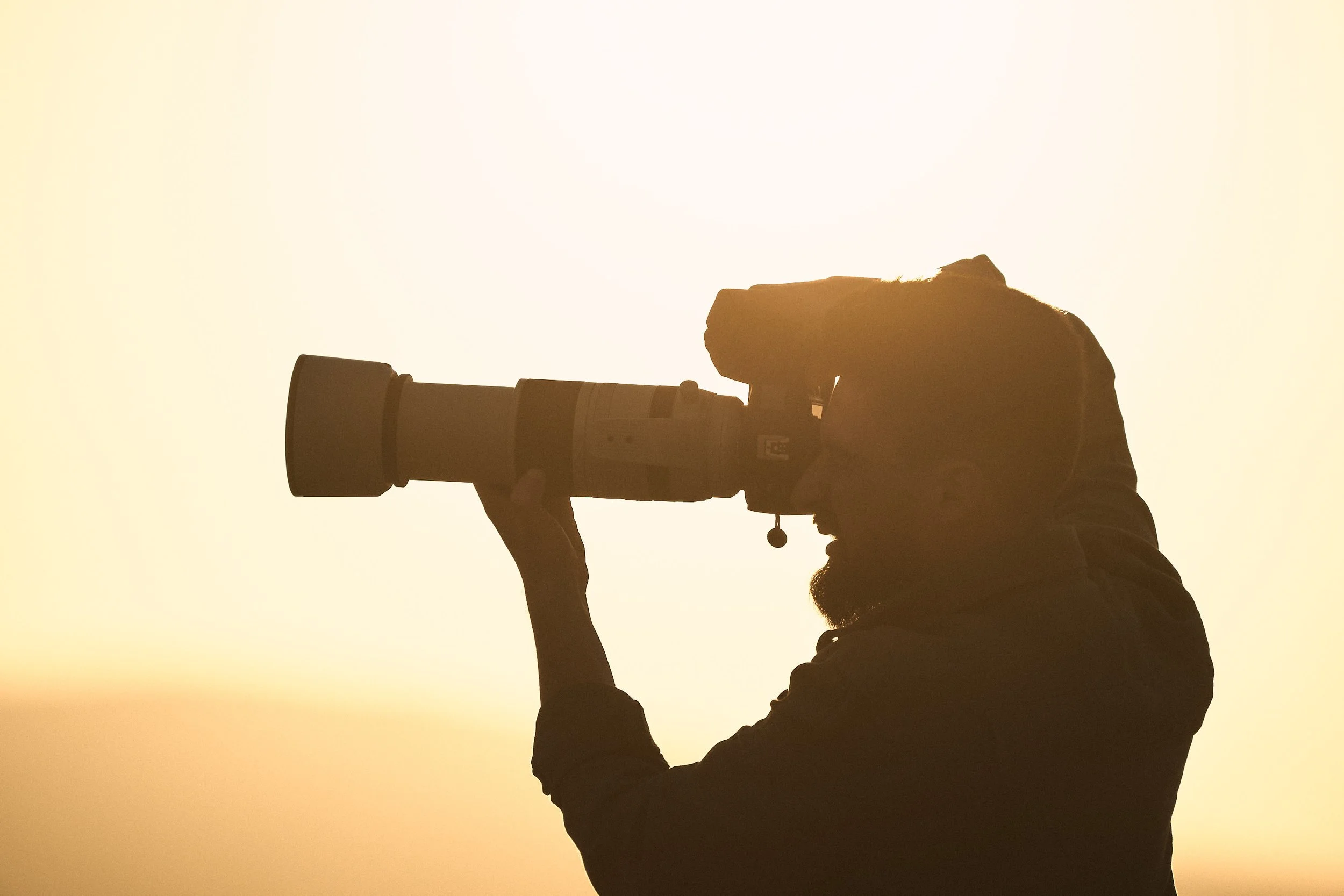
Canon 100-500mm RF offers incredible versatility and quality in a compact and lightweight package.
Thinking beyond the spec sheet
No single lens is “the best” for everyone. In my own work, the Canon 100–500 mm remains my favourite all‑in‑one wildlife lens. It compromises on maximum aperture, but the flexibility and packability make it the most practical choice; I can cover about 95 % of my wildlife subjects with this single lens. When I’m travelling light or need to move quickly, the 100–500 keeps my kit streamlined without feeling limiting. If conditions allow me to carry extra bulk and weight—as on a dedicated safari—then I step up to a two‑lens combination: a 600 mm f/4 for super‑telephoto reach, paired with the 100–300 mm f/2.8 for mid‑range work. Together, these two lenses cover everything from close portraits to distant action while offering fast apertures and the flexibility to handle changing conditions. Before upgrading, ask yourself what problems you’re solving. Is it reach, subject distance, low‑light performance or all of the above? Remember, a versatile zoom paired with careful stalking can deliver a more intimate image than the longest lens shot from far away.
💬 It’s not just about the lens.
The real progress starts when you use it with intention — in the field, with time to practice, reflect, and improve.
That’s exactly what we focus on in my photography workshops: immersive, small-group experiences where you can truly develop your skills, no matter what gear you use.


May 15 - 27, 2026