
Deadvlei’s Fossilised Forest: Photographing Ancient Trees Under Desert Sun and Stars
Standing in Deadvlei feels like walking onto another planet. The white clay pan lies encircled by towering red dunes, and in the centre stand the skeletons of camel thorn trees that died more than six centuries ago. Their gnarled branches reach skyward like twisted sculptures, preserved by the arid climate and intense sun. These trees once thrived when the Tsauchab River occasionally flooded, but when shifting sand dunes blocked the river, the water source disappeared and the forest died. The wood did not decompose; it simply dried out, petrifying into blackened silhouettes .
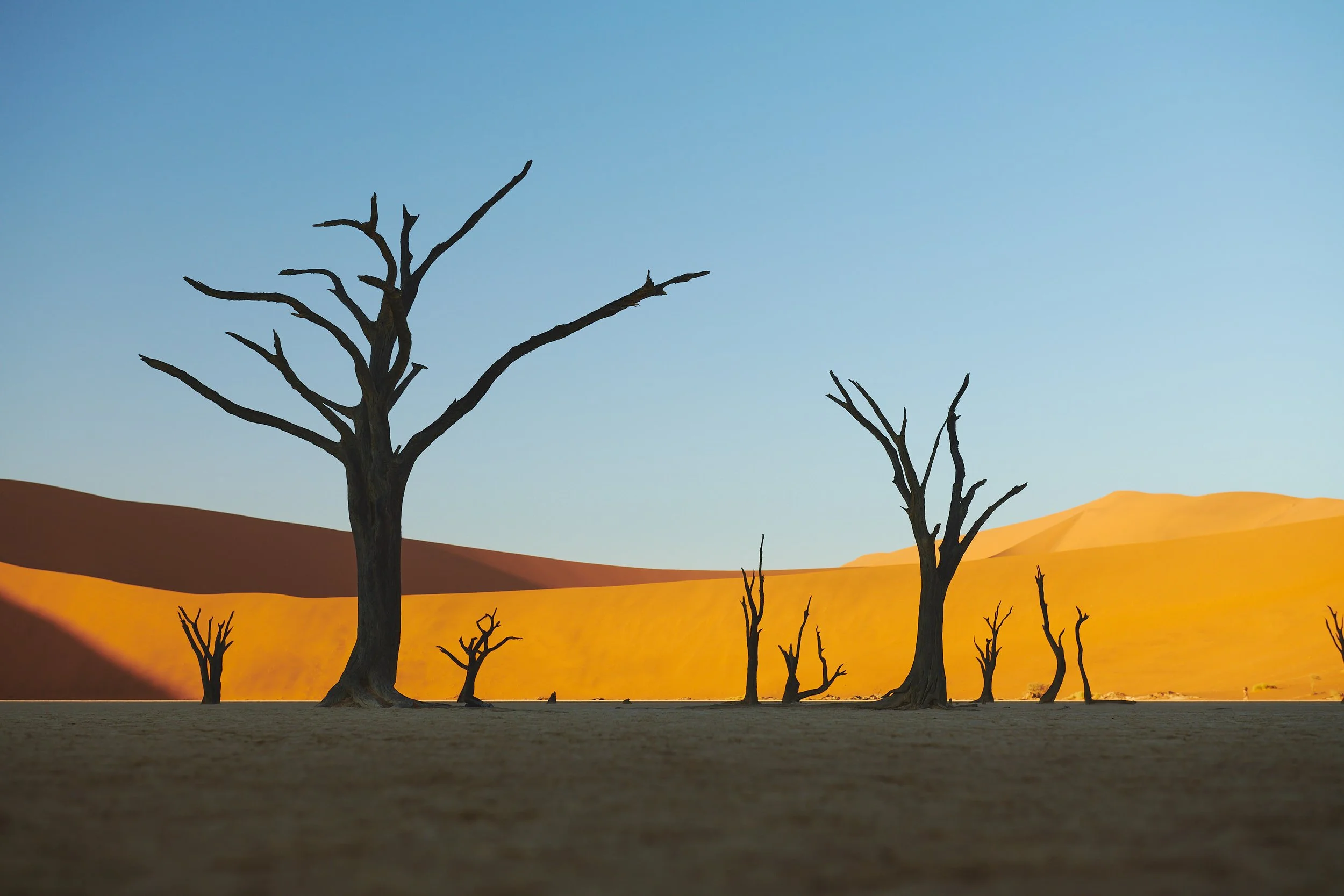
Deadvlei is a place that will never fail to inspire new compositions.
Light and Mood
Deadvlei changes personality with the light. At dawn the surrounding dunes cast long blue shadows across the pan, while the first rays of sunlight paint the dunes in warm hues. Midday brings harsh contrast—the bleached clay becomes almost blinding and the trees stand in stark relief against the sky. Late afternoon offers softer light again and shadows lengthen across the pan, creating graphic lines that can be used for composition.
Most photographers favour early morning or late afternoon for still images, but midday presents opportunities as well. Overcast days are rare here, so rather than avoiding harsh light, embrace it by converting your images to black and white. The high contrast emphasises the shapes of the trees and the textures of the clay. Experiment with high‑key exposures to give the scene an ethereal feel.
Compositional Considerations
Use the rule of odds to arrange multiple trees in your frame—groups of three or five create visual harmony. Pay attention to spacing; you want each tree to stand apart so their shapes don’t merge. A wide‑angle lens (24 mm or wider) allows you to include the sweeping dunes along with the trees, while a longer lens can isolate a single tree against the warm sand. When using a wide lens, get low to accentuate the cracked clay patterns in the foreground.
Move slowly and deliberately. Footprints linger in the sand for a while if it’s not windy, so be mindful of where you walk. If you plan to photograph a particular composition, approach it from behind or along the edges to keep the foreground pristine. It should go without saying: never climb on or touch the dead trees . They are fragile relics and irreplaceable.
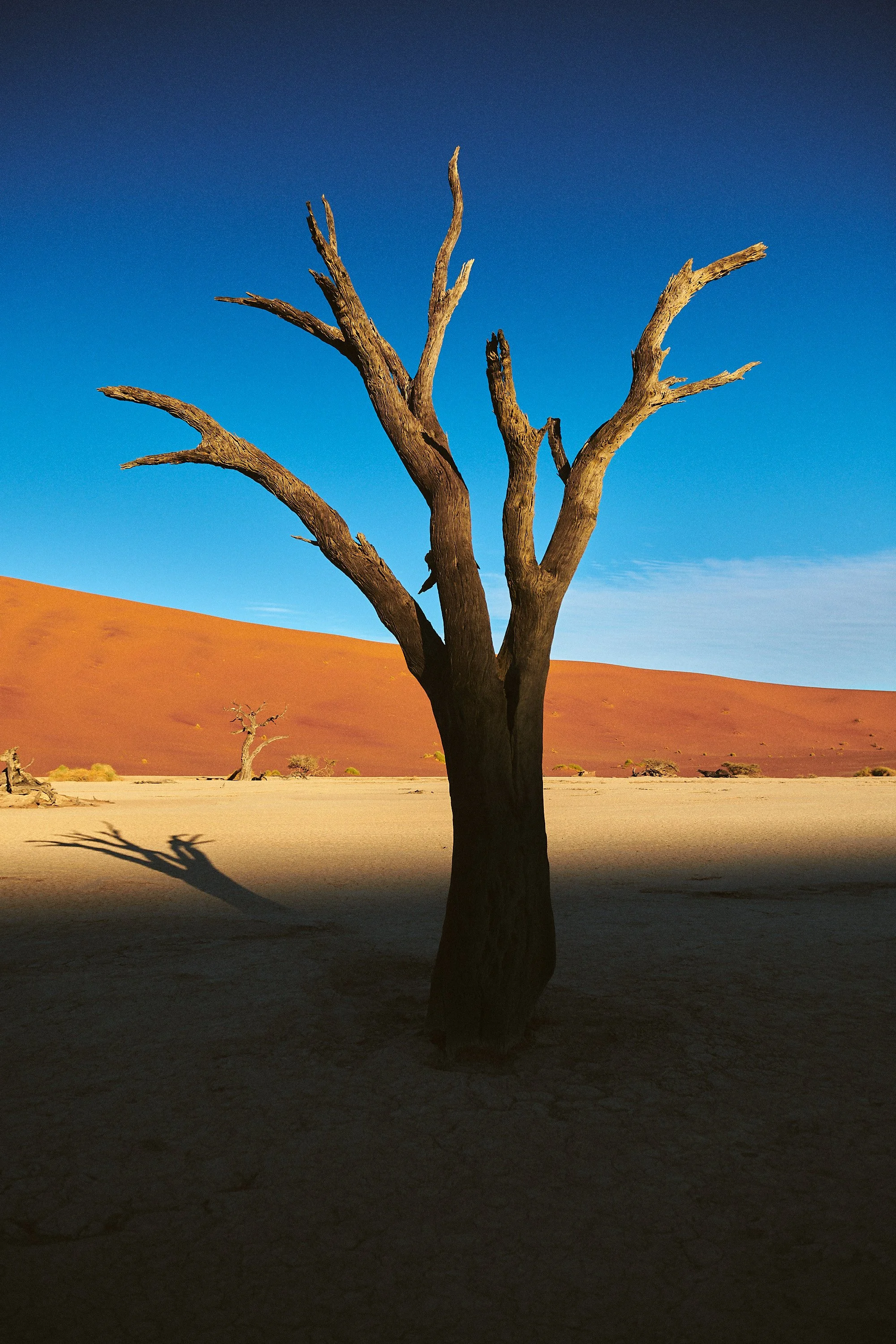
Wide angle compositon
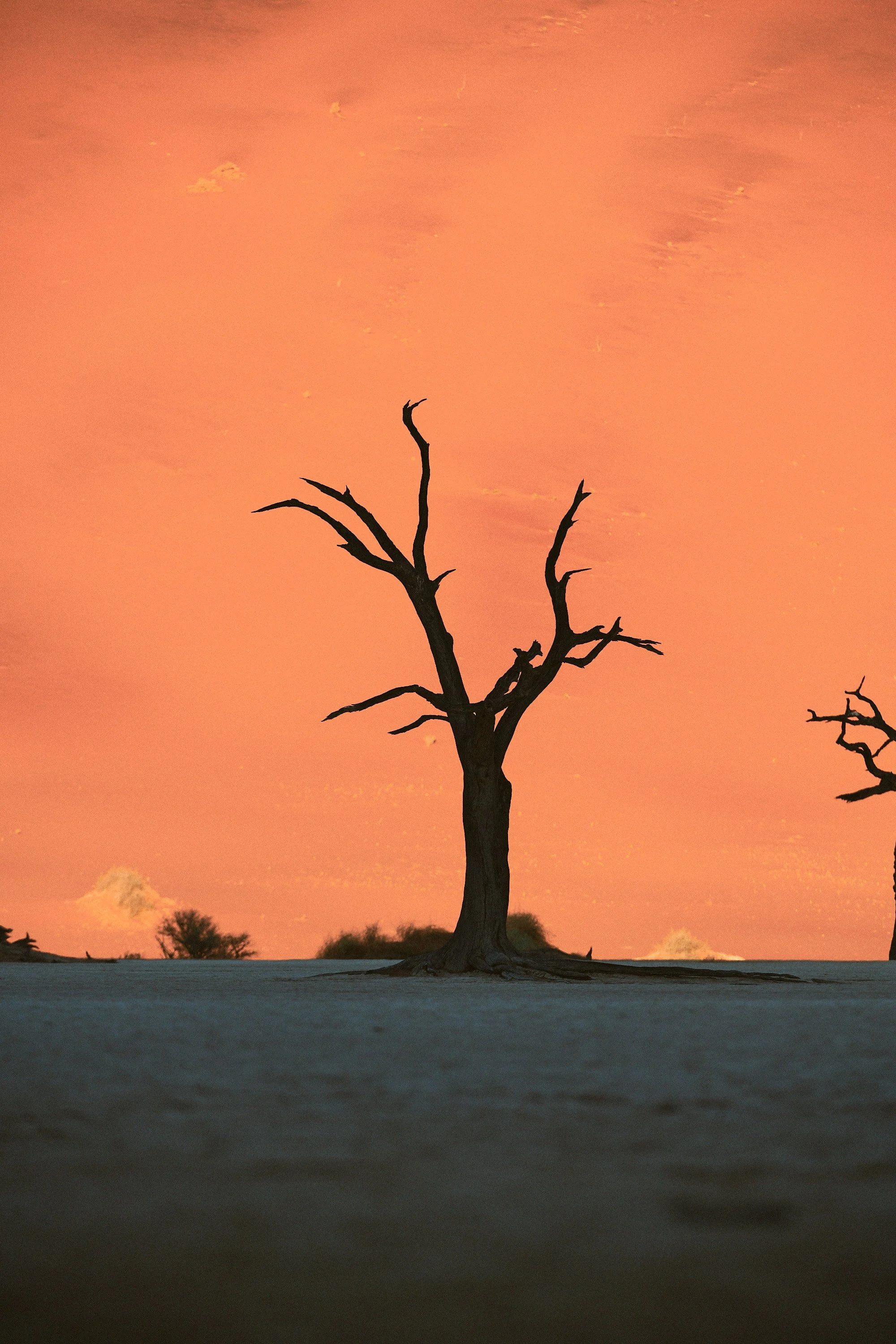
Telephoto composition
During the day, use a polarising filter to deepen the blue of the sky and reduce glare on the clay. Meter carefully to avoid blowing out highlights—expose for the bright ground and lift shadows later. Bracket your exposures if necessary. In windy conditions, watch for dust swirling across the pan; this can add atmosphere but may also require protective measures for your gear.
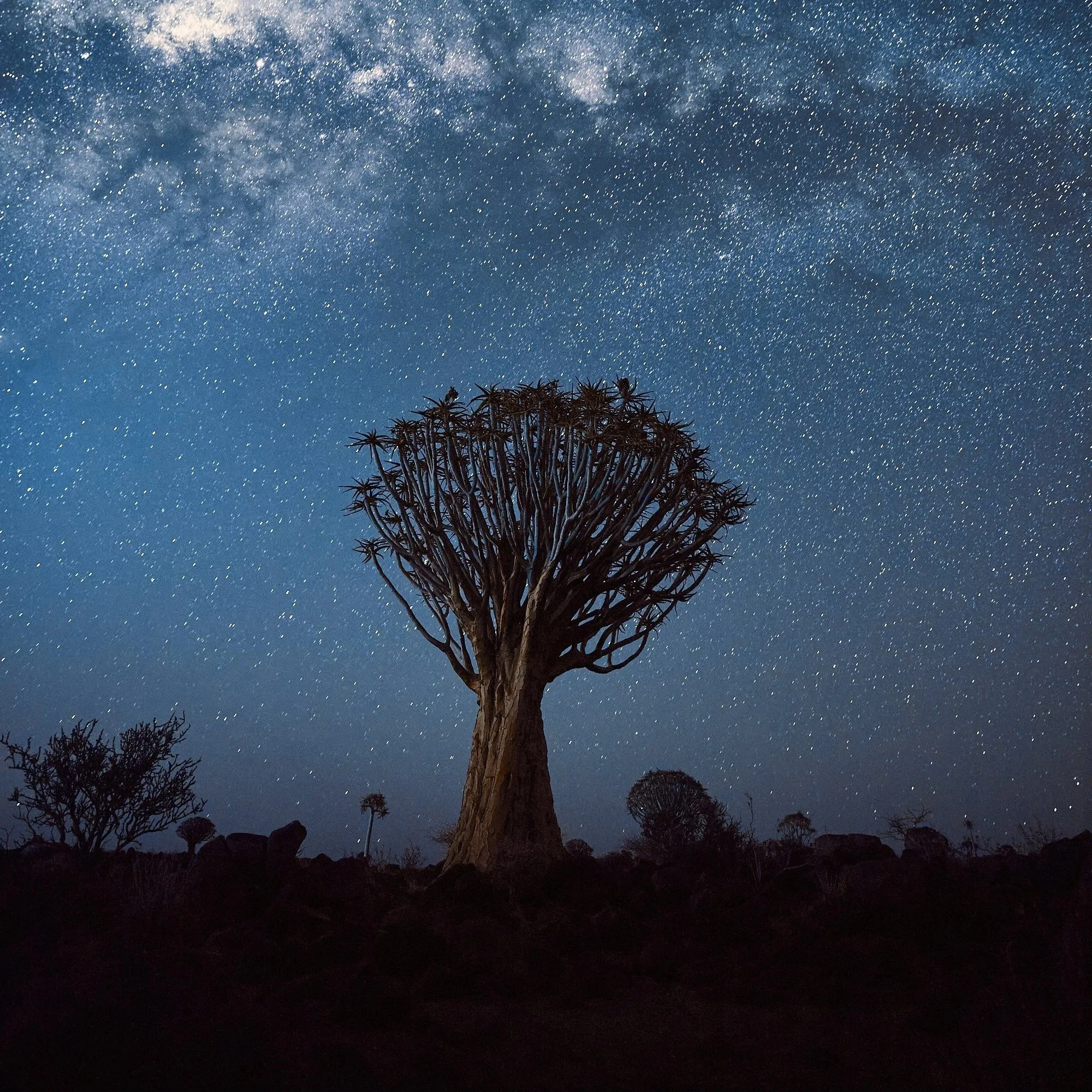
At night Deadvlei becomes an eerie stage set. The surrounding dunes block most horizon light, and the absence of moisture yields crystal‑clear skies. Unfortunately it’s no longer possible to get night photo permits, and park rangers are very strict, so never attempt to stay longer than you should.
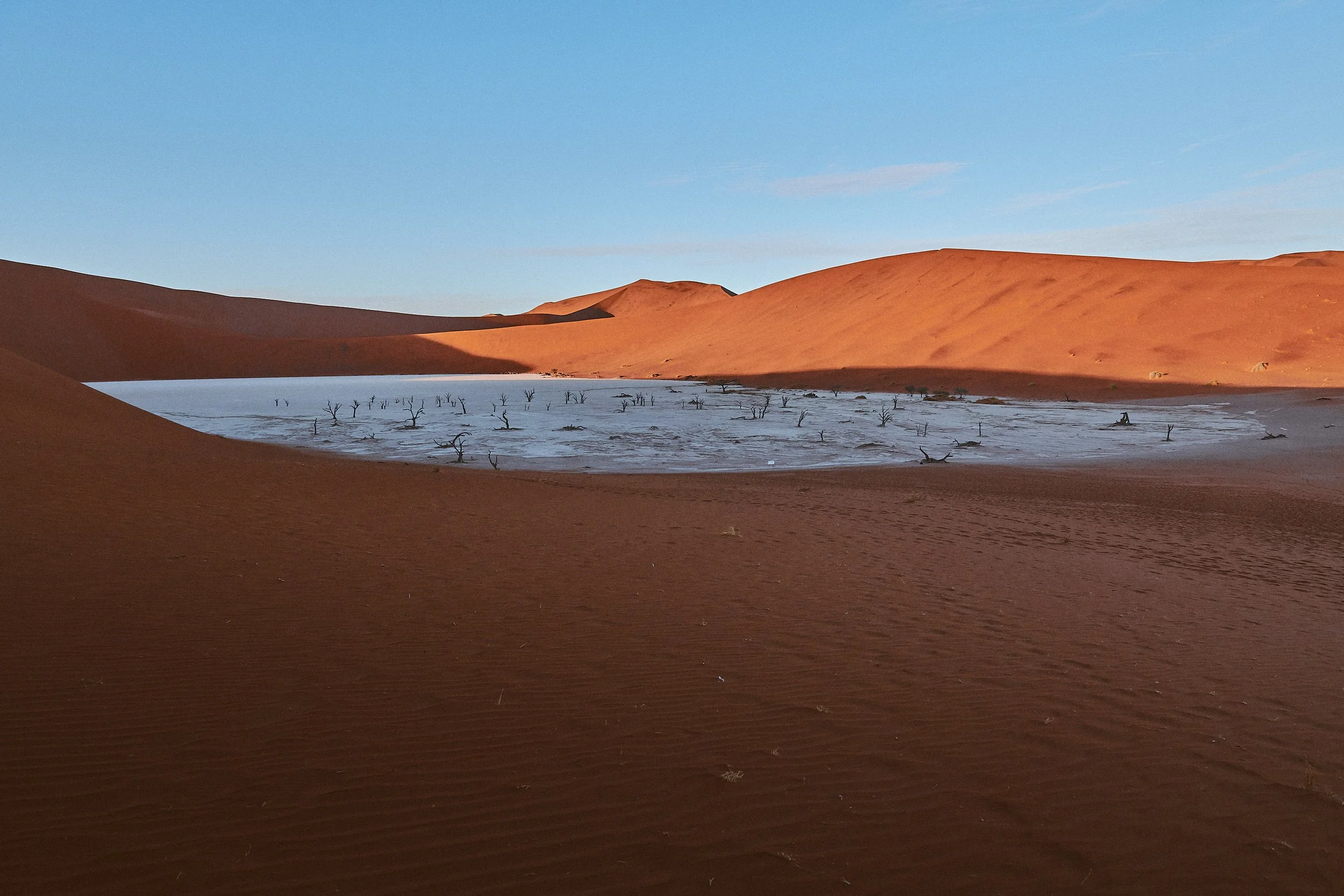
Deadvlei pan at sunrise
Storytelling and Presence
Beyond technical choices, think about the story you want to tell. Some photographers emphasise the scale of the place by including human figures dwarfed by dunes; others focus on the trees alone to evoke solitude. You could also document the journey into Deadvlei—the 4×4 ride through deep sand, the walk past Big Daddy, the moment the pan appears. Consider creating a series that moves from broad landscapes to details, illustrating your progression and deepening engagement with the site.
As always, presence is paramount. Spend time without your camera in hand. Let your eyes adjust to the brightness and later to the darkness. Notice the sound of wind over the dunes and the crunch of clay underfoot. The photographs you make after truly inhabiting the scene will resonate more strongly with viewers.
Deadvlei offers a rare opportunity to photograph a landscape that hasn’t changed in hundreds of years. Its ancient trees and stark contrasts challenge and reward patient photographers. Whether you shoot at dawn, midday or under a canopy of stars, treat this place with respect. If you’d like to delve deeper into desert photography techniques or join me on an immersive workshop that includes Deadvlei, subscribe to my newsletter and explore upcoming dates.
📷 Want to experience Deadvlei as more than a backdrop?
On my workshops, we don’t just photograph iconic locations — we learn how to approach them with patience, presence, and purpose.
If you want to explore places like this with a small group of photographers who value silence, story, and fieldcraft over filters, keep an eye on my upcoming trips.
Some landscapes ask for more than a wide-angle and a perfect sky. They ask for your full attention.


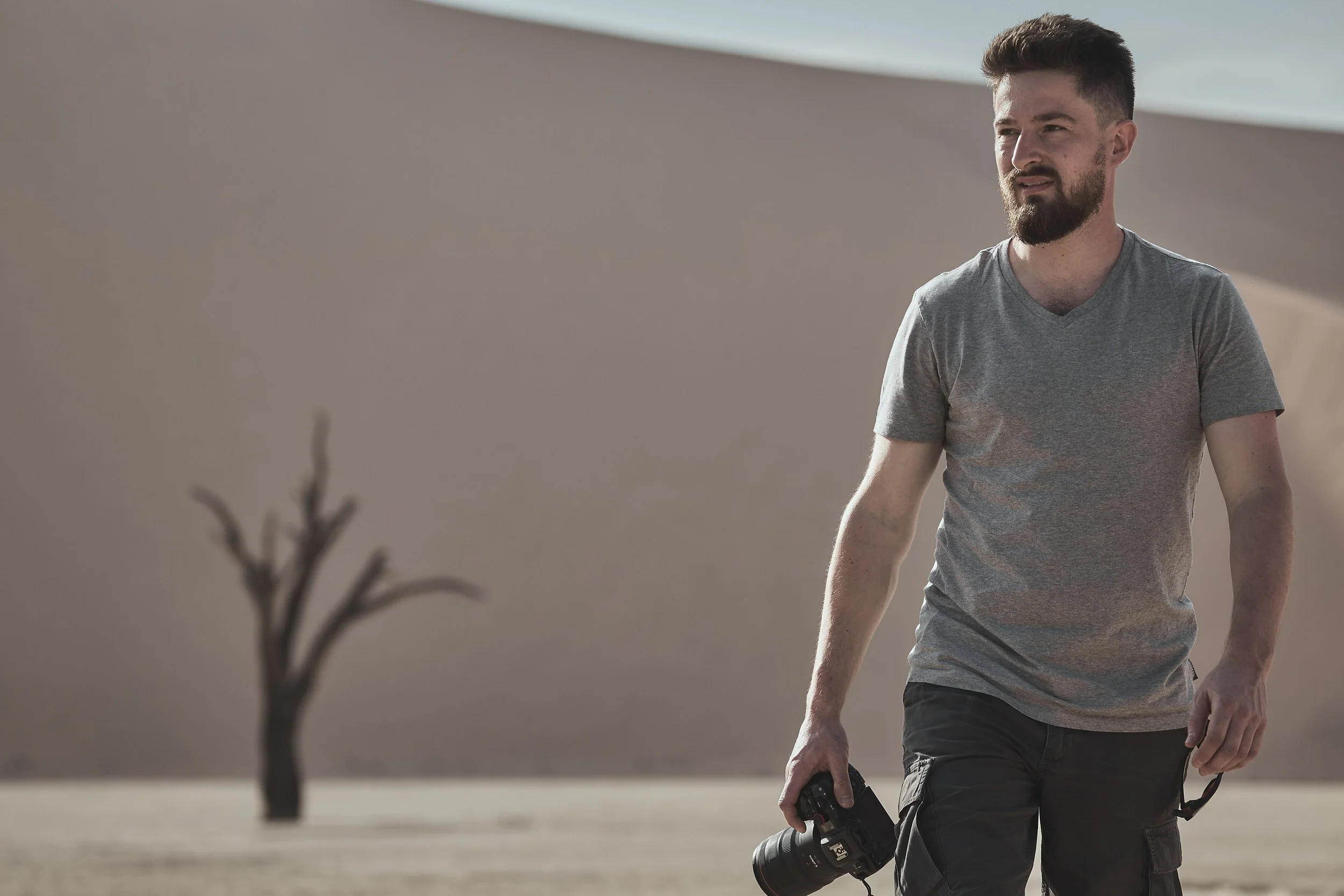
Morning session in Deadvlei during Iconic Namibia 2023
May 15 - 27, 2026