
Chasing Shadows at Sossusvlei: Fine‑Tuning Exposure and Composition Among Namibia’s Dunes
Sossusvlei is a place where light and shadow become your primary subjects. Situated within the Namib‑Naukluft National Park, this series of clay pans is surrounded by some of the tallest dunes on Earth. After rare rains, water occasionally collects in Sossusvlei, but nearby Deadvlei is permanently dry—its river was cut off centuries ago, leaving 600–900‑year‑old camel thorn trees bleached black against white clay and red sand . The contrast of colours and shapes makes this area one of Africa’s most photographed landscapes.
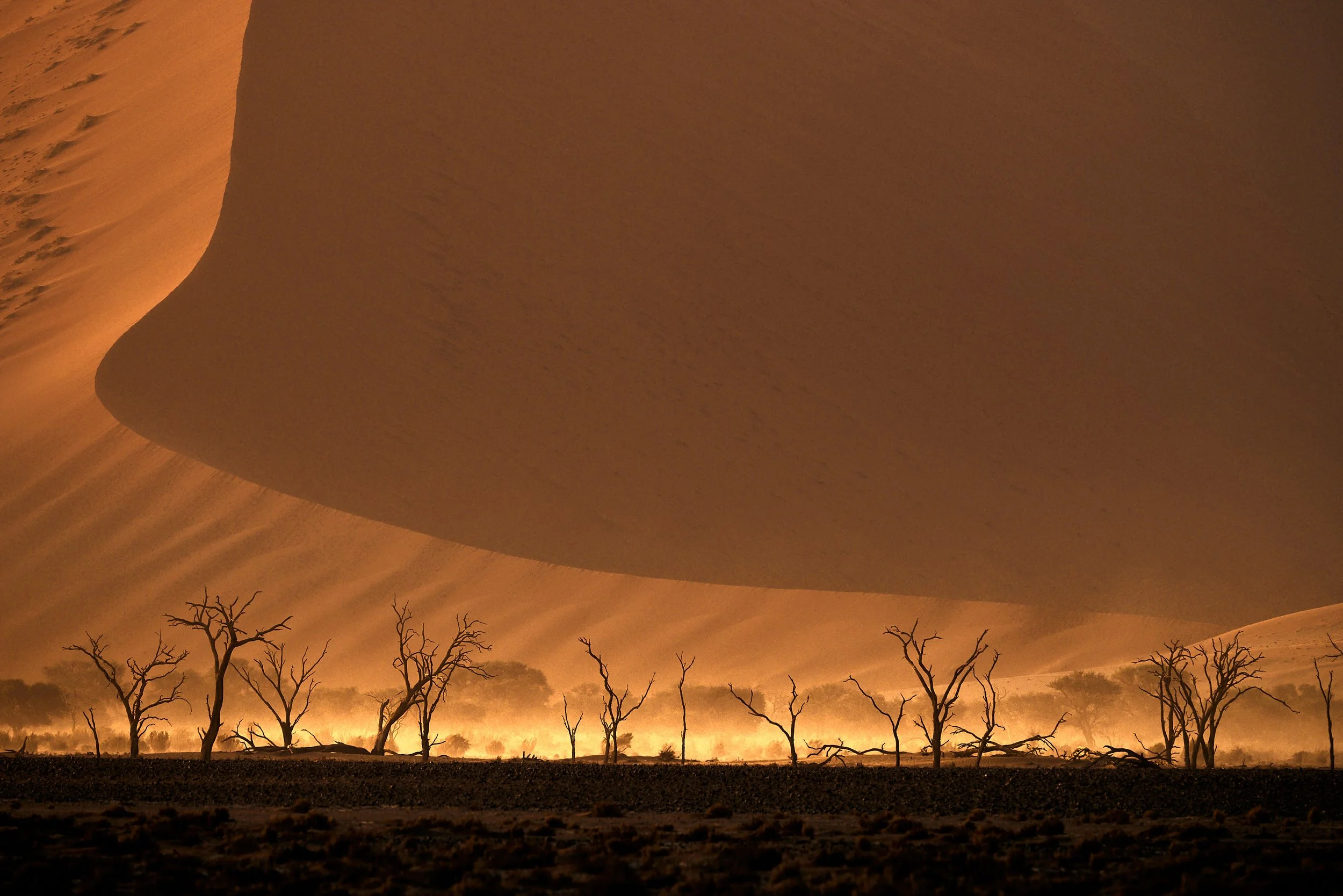
An unnamed dune somewhere in front of Dune 45
Understanding the Scene
First, know the difference between the various “vleis.” Sossusvlei itself is a salt‑clay pan where water sometimes pools, reflecting dunes and sky. Deadvlei lies a short walk away and features those iconic dead trees. Further up the road you’ll find Dune 45 and Big Daddy. Dune 45 stands by the road and is famous for sunrise climbs; Big Daddy towers over Deadvlei and takes over an hour to ascend . Each location offers different opportunities, so plan accordingly.
Light is everything here. The dunes glow golden at sunrise, then transition to deep oranges and reds before flattening under harsh midday light. Climb Dune 45 before dawn—park at the lot and allow at least 45 minutes to reach the top. The walk is strenuous; the sand is soft and the ridge steep . But the reward is panoramic views of waves of dunes catching the first light. When the sun is low, shadows carve elegant curves into the sand, creating natural compositions.
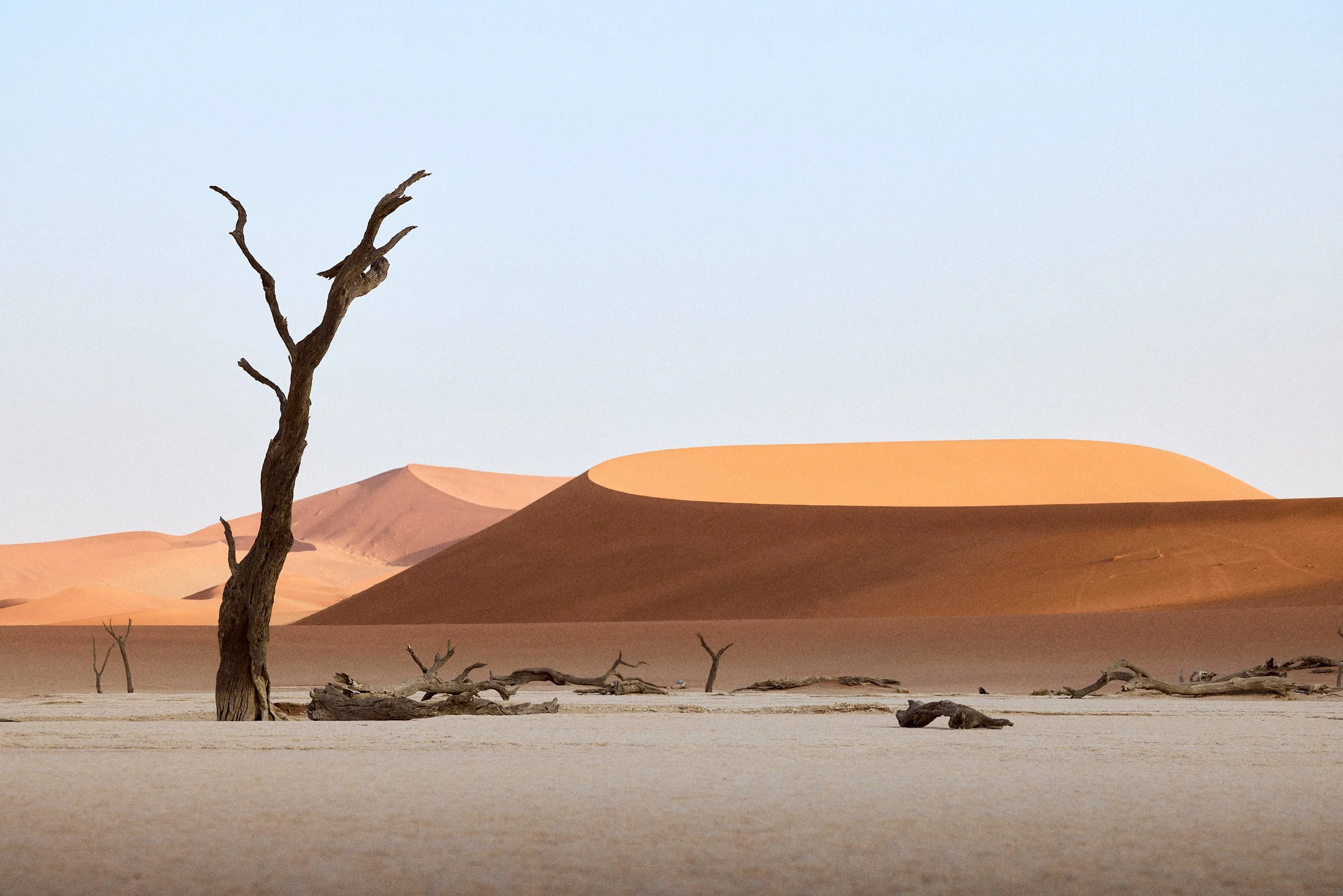
Deadvlei, shot with 100-500mm f/4.5-7.1 lens
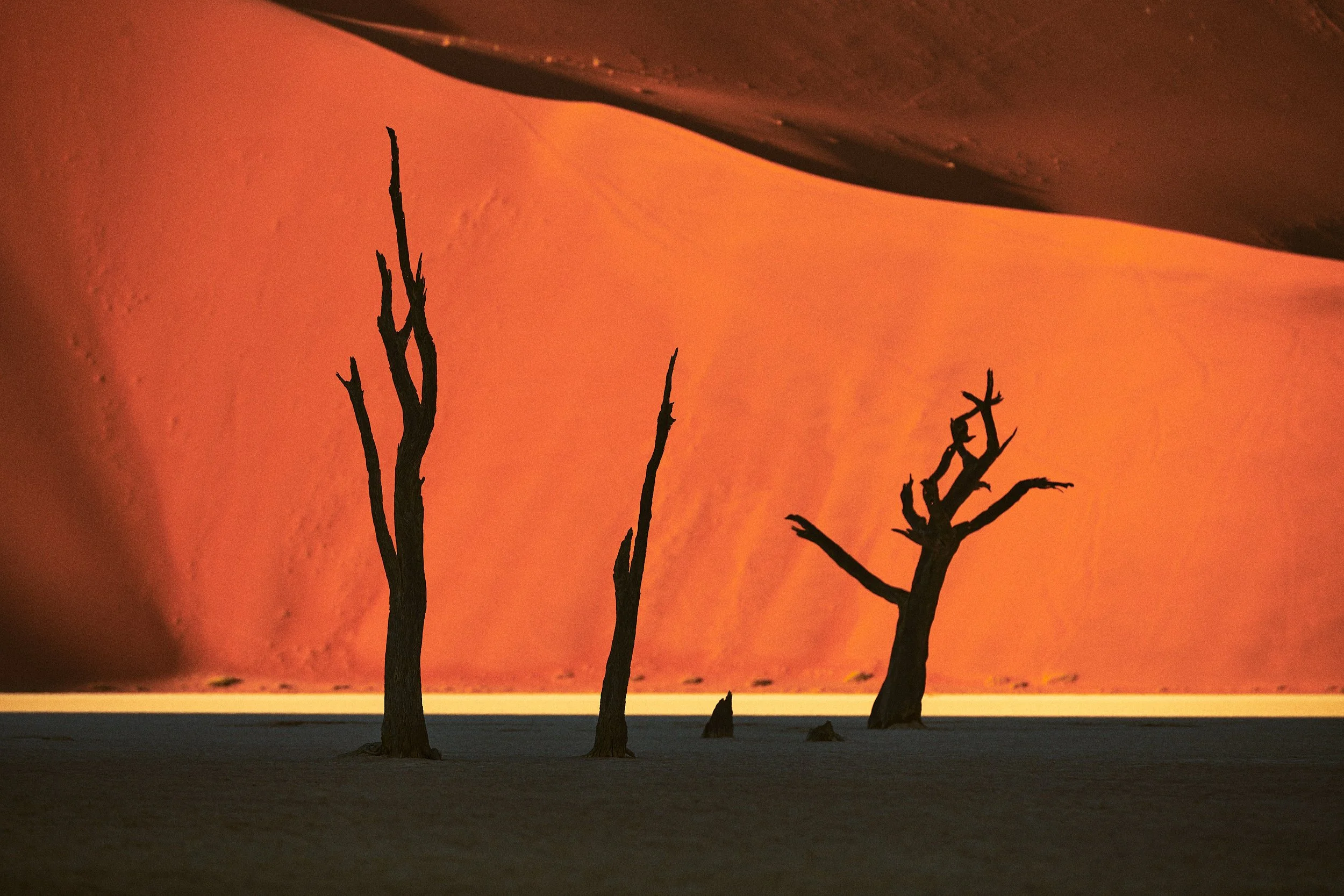
Deadvlei, shot with 70-200 f/2.8 lens
Composition Techniques
Simplicity is key. And to simplify, often a telephoto is better than a wide angle. It allows to compress this vast landscape and put it down to shapes and lines. Pay attention to where those lines lead. Diagonals and curves guide the viewer’s eye through the frame. The sinuous crest of a dune can act as a leading line, while the meeting point of light and shadow provides contrast. Experiment with high and low viewpoints; even a slight elevation change will alter how the dune’s shape appears.
When photographing Deadvlei, treat the camel thorn trees as characters. Isolate a single tree against a clean background to emphasise its sculptural form, or include several to create depth. Remember that these trees are fragile relics; touching them is forbidden . Late afternoon produces long shadows that stretch across the pan like ink strokes on paper. Adjust your exposure to preserve detail in the highlights; the white clay is bright but not pure white. A polarising filter can deepen the blue of the sky and reduce glare.
For more abstract images, look for patterns in the sand—ripples created by wind, footprints leading up a slope. Use a telephoto lens to compress distance and highlight textures. Don’t be afraid to shoot into the light; backlighting the sand accentuates its translucence and reveals shimmering highlights along the ridge.
Managing Exposure
High‑contrast scenes demand careful metering. Consider bracketing exposures: capture one frame exposing for the shadows, another for midtones, and a third for highlights. Merging these files in post‑processing allows you to retain detail throughout. Alternatively, use the histogram to expose to the right without clipping highlights, then bring back shadows later. The dynamic range of modern sensors can handle more contrast than you might think, but caution is warranted when photographing bright sand under direct sunlight.
Carry plenty of water—at least one litre per person, more if you plan to hike Big Daddy . The desert heat is unforgiving, and there is no shade on the dunes. Protect your equipment from dust: change lenses sparingly (better, not at all) and use a camera cover when the wind picks up. Early morning and late afternoon not only provide the best light but also cooler temperatures and fewer crowds.
The Journey Matters
Part of Sossusvlei’s magic lies in getting there. The drive from Sesriem passes through a 60‑km corridor of dunes. Stop at Dune 45, ascend its spine and watch the sunrise. Continue on to the 2WD parking area; the final 5 km to Deadvlei requires a 4×4 or shuttle. Along the way you may spot oryx and ostriches navigating the dunes. Don’t rush; use the journey to make photographs of the road, the shifting light and the anticipation of arrival.
On your way back to Swakopmund (or Windhoek), stop at Solitaire for a slice of its famous apple pie and a look at the vintage cars rusting in the sand . Photographing these relics provides a welcome human element and a sense of narrative in a region dominated by raw geology.
For more practical infos about the logistics and location, check out this full guide to photographing in Sossusvlei.
Photographing Sossusvlei and Deadvlei is an exercise in timing, minimalism and endurance. By understanding the nuances of light and composition, you can capture images that convey both the vastness of the desert and the delicate details of its features. Remember that each step you take leaves a footprint; tread lightly, respect the landscape and let your images reflect the reverence you feel. For more in‑depth guidance, subscribe to my newsletter or join an upcoming workshop where we explore these dunes together at dawn.
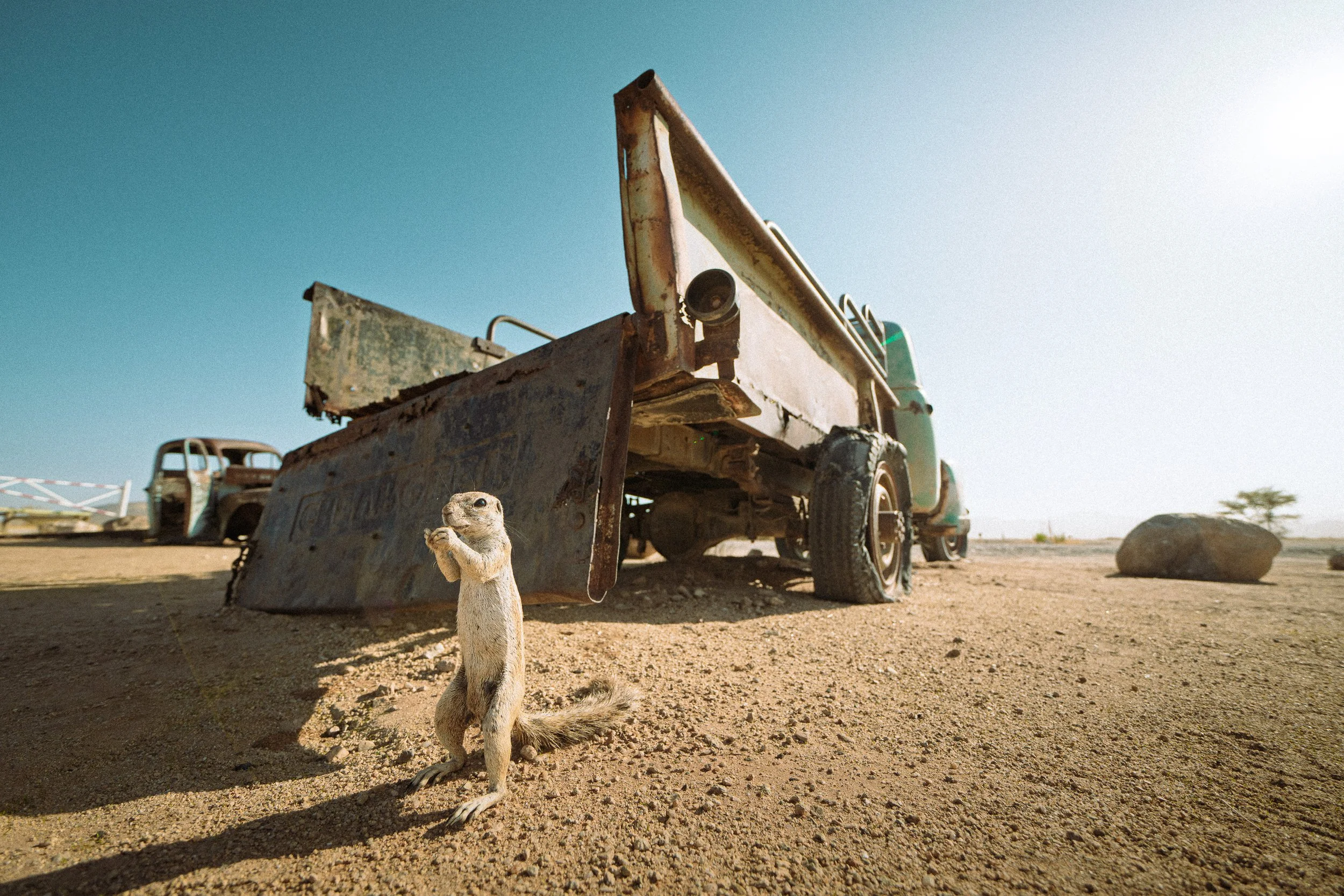
Ground squirrel in Solitaire.
📷 Want to experience Sossusvlei as more than a backdrop?
On my workshops, we don’t just photograph iconic locations — we learn how to approach them with patience, presence, and purpose.
If you want to explore places like this with a small group of photographers who value silence, story, and fieldcraft over filters, keep an eye on my upcoming trips.
Some landscapes ask for more than a wide-angle and a perfect sky. They ask for your full attention.


May 15 - 27, 2026