
Top Safari Lenses of 2026: Field‑Tested Favourites
A safari is an exercise in extremes. One moment you’re framing a vast landscape under pastel dawn; the next you’re trying to fill the frame with a cheetah sprinting through golden grass. The lens you choose becomes your interpreter, translating the drama of the bush into an image that can convey both the intimacy of an encounter and the scale of a wild horizon. In 2026 the lens market is overflowing with choices. Manufacturers have released zooms and primes covering every focal length imaginable and each promises to be the answer to your photographic dreams. I have spent years traveling around with most of these lenses and I know that no single optic is perfect for every situation. The aim of this article isn’t to declare a winner; it’s to help you choose intelligently based on your goals, style and body strength.
What makes a great safari lens?
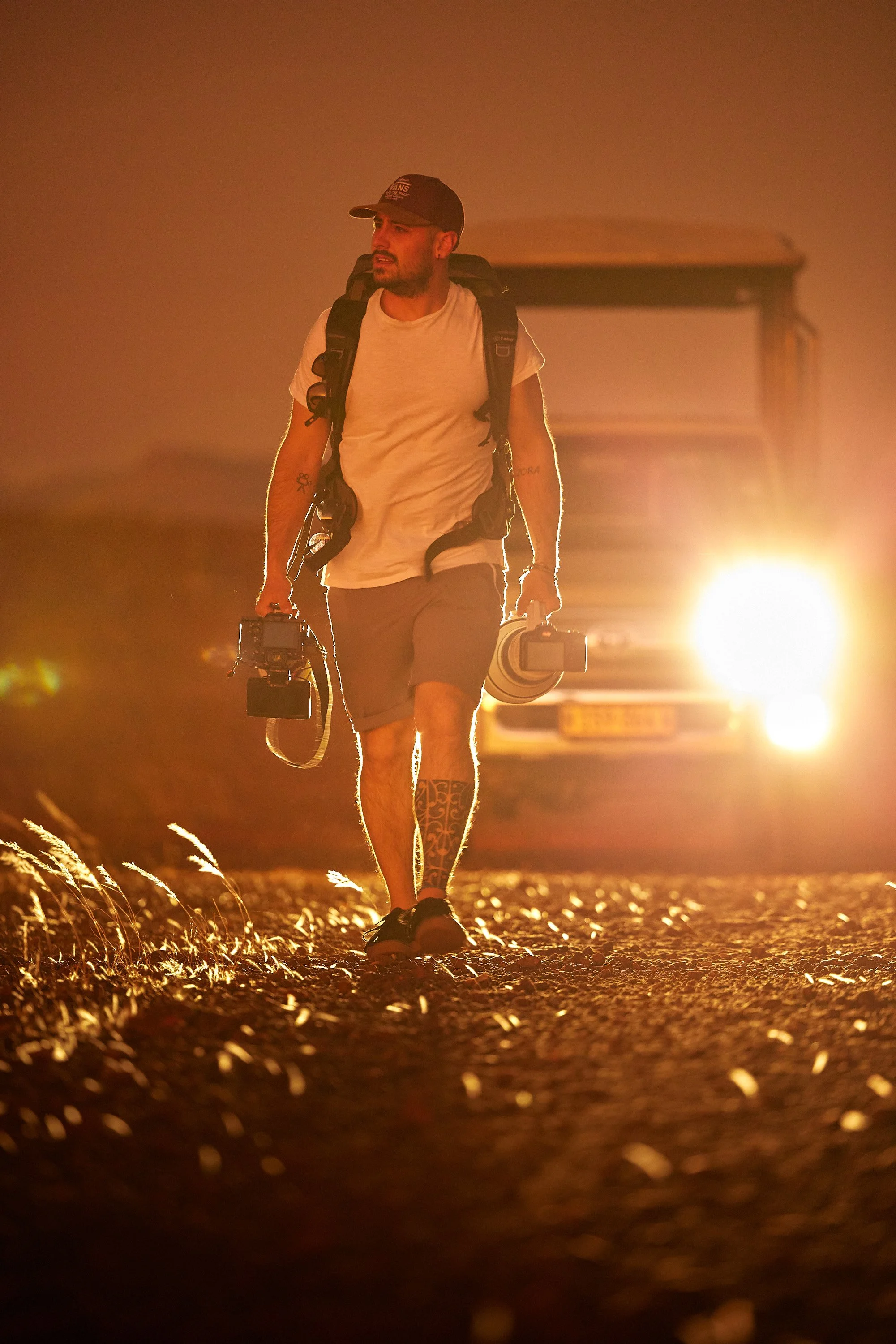
Carrying around multiple lenses on safari is not always the easiest. Damaraland, Namibia.
Before diving into specific recommendations, it helps to define what matters in the field:
Reach vs. flexibility: Long focal lengths bring distant animals closer, but a zoom allows you to adapt composition quickly when a lioness suddenly approaches your vehicle. A fixed 600 mm lens gives you stunning feather detail on an eagle, but it can be too tight when a herd of elephants crosses the road just metres away.
Aperture: A wide maximum aperture (f/2.8 or f/4) creates shallow depth of field and gathers more light at dawn and dusk. This comes at the cost of weight, size and price. Slower lenses (f/5.6–6.3) are lighter and more affordable, but they require good light and higher ISO.
Weight and portability: Your lens is your constant companion. A 3.5 kg prime may be comfortable for a strong photographer on a stable vehicle but it becomes a burden if you need to walk for hours or fly in light aircraft. Think about how you travel: in Namibia we sometimes hike dunes; in Zambia we sit in open vehicles; in the Alps we hike on steep terrain looking for ibex. Your lens choice should reflect your itinerary.
Image quality and autofocus: Modern lenses deliver superb sharpness and contrast. More important is how quickly and accurately they lock focus on moving subjects. Wildlife doesn’t wait while your lens hunts.
With these factors in mind, let’s explore some of the most compelling safari lenses of 2026 and why I gravitate toward them.
The versatile zooms
Canon RF 100–500 mm f/4.5–7.1L IS USM
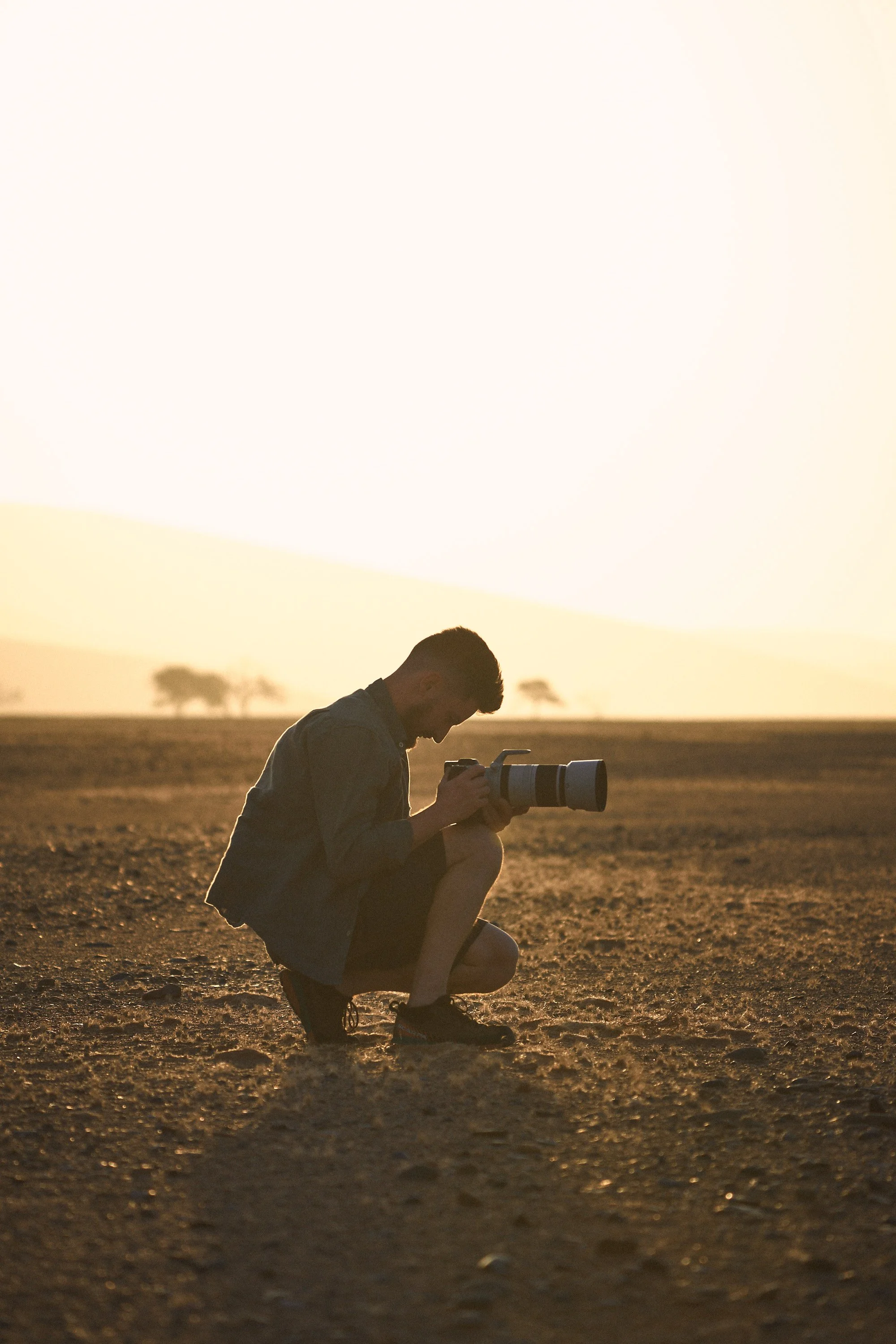
Shooting landscapes in the Namib desert with the 100-500mm.
This lens is my desert island pick. It isn’t the fastest at the long end (f/7.1 at 500 mm forces you to raise ISO as dusk falls) but the balance of reach, weight and image quality is outstanding. At around 1.5 kg it’s light enough to hand‑hold all day. The zoom range covers landscapes at 100 mm, environmental wildlife at 300 mm and close portraits at 500 mm. If I could only pack one lens for a safari, this would be it. Paired with a capable body like the R3 or R5, you can capture 95 % of encounters without ever changing lenses.
Sony FE 200–600 mm f/5.6–6.3 G OSS
Sony shooters have a gem in the 200–600. It offers slightly more reach than the Canon 100–500 while maintaining internal zooming. Autofocus is fast and reliable and the lens produces crisp images across its range. The trade‑off is weight, just over 2 kg, a bigger size and a longer minimum focal length. But in open savannah, the extra 100 mm on the long end is invaluable for small birds and distant predators. In some situations 200 mm can feel cramped, requiring you to switch to a shorter lens or zoom with your feet, so I wouldn’t recommend it for landscapes, but it’s an incredible all in one for wildlife.
Nikon Z 180–600 mm f/5.6–6.3 VR
Nikon’s more recent entry into the long‑zoom mirrorless market is compelling. The Z 180–600 is relatively compact and affordable, making it a smart choice for photographers building their Z‑mount kit. The lens’ five‑stop vibration reduction helps when hand‑holding at slower shutter speeds . It doesn’t have the weather sealing of the more expensive Z 100–400 mm, so I recommend using a rain cover in very dusty or wet conditions. For many Nikon shooters, this will be the only long lens they need.
Canon RF 200–800 mm f/6.3–9 IS USM
Released last year, this lens appeals to bird specialists. The 800 mm reach brings small subjects close without teleconverters, and the 200 mm starting point keeps it somewhat versatile. However, the f/9 maximum aperture at the long end demands bright light and a camera body capable of clean high ISOs. For general safari use, where subjects vary in size and light can be dim, I’d favour the 100–500. If you primarily photograph tiny, distant birds in open sunlight, the 200–800 shines.
Join me in the field


Fast primes for the dedicated hunter
Canon RF 600 mm f/4L IS USM (same as Sony equivalent)
This lens is legendary for a reason. The f/4 aperture lets you isolate your subject against creamy backgrounds while maintaining faster shutter speeds in low light. Sharpness is superb wide open, and autofocus snaps instantly onto moving targets. But quality comes with heft (3.1 kg) and a price tag that requires commitment. I use this lens when I know I’ll need the reach and won’t need to move too much around. It’s unbeatable for capturing distant wildlife and I would take the 600mm over the 400mm f/2.8 all the time; in my opinion the advantage of extra reach (that means we can stay further away from our subject) is more than worth 1 stop of light loss. Combine it with a 1.4× teleconverter for 840 mm reach without sacrificing too much image quality.
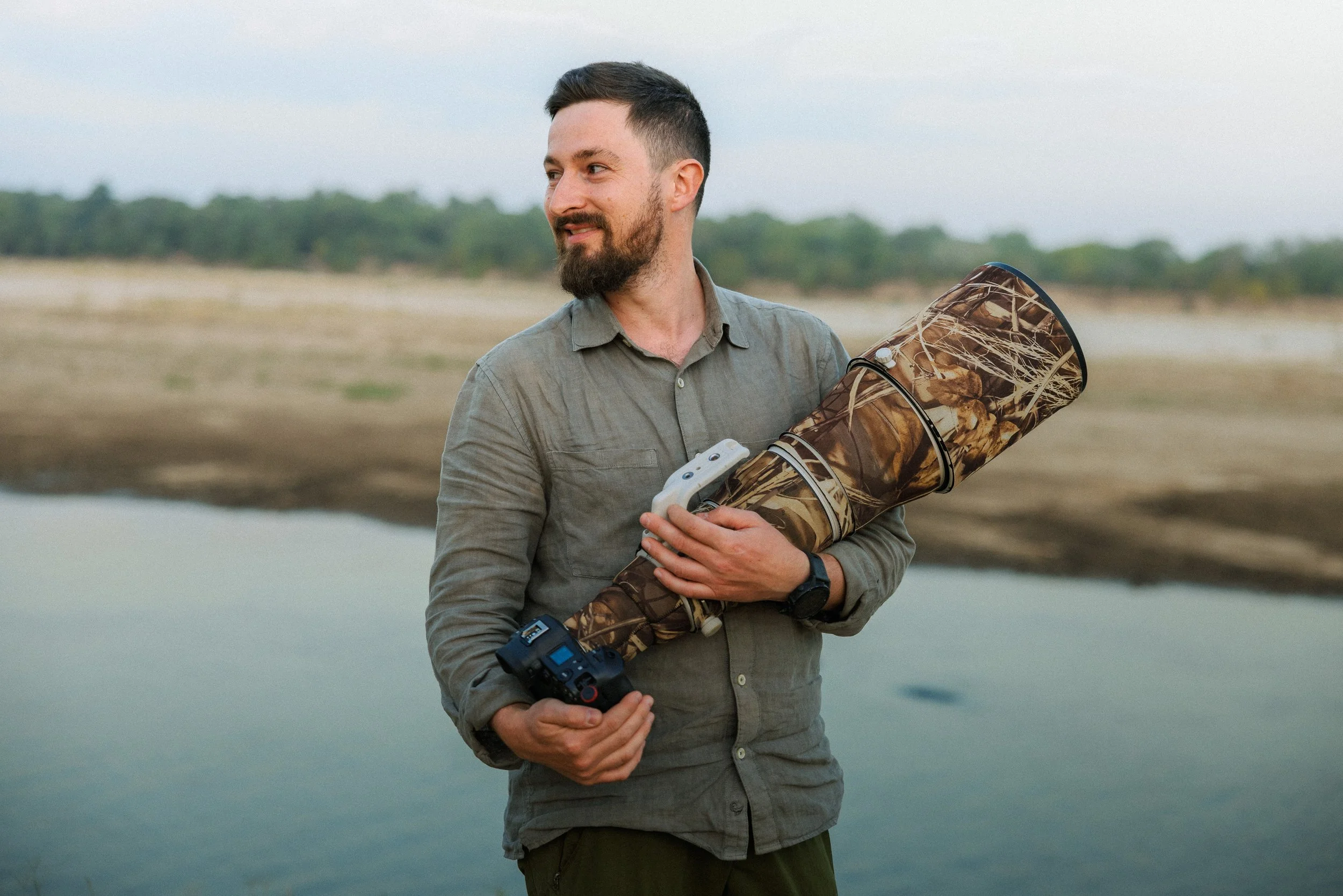
With the R3 + 600mm f/4 in South Luangwa NP, Zambia.
Canon RF 100–300 mm f/2.8L IS USM
Introduced in 2024, this lens bridged a gap between long primes and telephoto zooms. It delivers a constant f/2.8 aperture across its range, producing beautiful separation and gathering enough light for pre‑dawn and twilight. The 100–300 pairs perfectly with the 600 mm f/4: together they cover everything from landscape‑infused wildlife scenes at 100 mm to detailed portraits at 600 mm. I often carry both on dedicated wildlife expeditions when weight is less of a concern. If space tightens, I’ll choose the 100–500 instead and accept the slower aperture.
Sigma 300–600 mm f/4 DG OS Sports
For Sony and L‑mount shooters, Sigma’s 300–600 offers constant f/4 brightness across an impressive range. It’s a beast at 3.9 kg, but if you can handle the weight (or are working from a vehicle), it delivers exceptional image quality. Autofocus is well‑suited for birds and mammals and the built‑in stabiliser helps manage hand‑held shots. This lens appeals to photographers who need the reach of a 600 mm prime but appreciate the flexibility of a zoom.
Nikon Z 600 mm f/4 TC VR S
Nikon’s flagship 600 mm f/4 includes a built‑in 1.4× teleconverter, transforming it into an 840 mm f/5.6 at the flick of a lever. This design means you can adapt instantly when a subject moves further away without fumbling with external converters. The lens balances surprisingly well for its length, making hand‑held shooting feasible. The price reflects its pro pedigree, but for serious wildlife photographers the convenience and performance justify the investment.
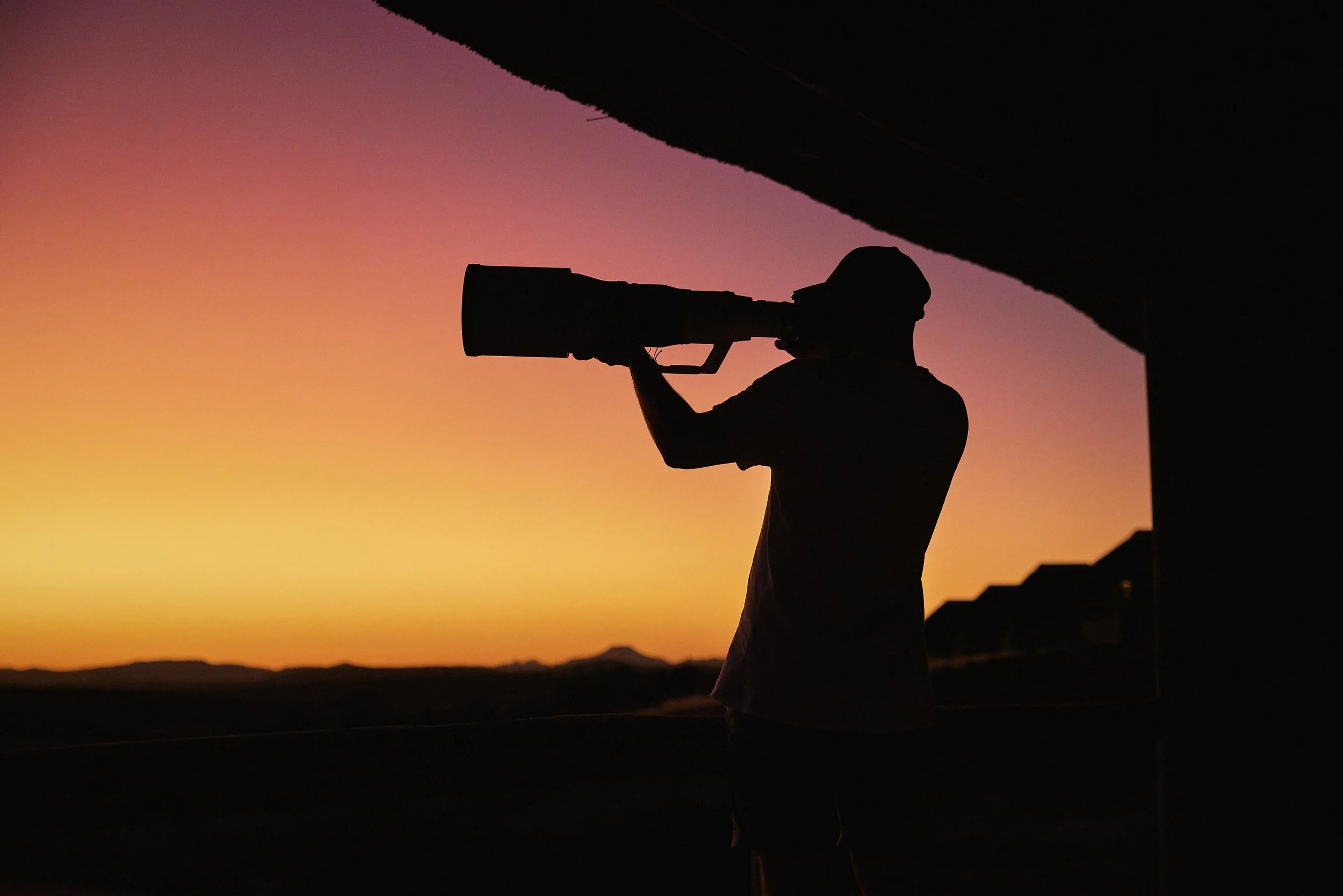
Handholding super telephotos is not always easy. Sunset in Damaraland, Namibia.
Choosing the right lens for your safari
No lens on this list is objectively the “best.” The right choice depends on your priorities and the subjects you most want to photograph.
If you crave versatility and portability, start with a 100–500 mm or 180–600 mm zoom. These lenses handle 90%+ of safari scenarios and their weight allows you to react quickly without a monopod.
If birds are your passion consider the Canon 200–800 mm / Sony 400-800mm or add teleconverters to a 600 mm prime. Small birds benefit from every millimetre of reach you can muster.
If you’re drawn to low‑light predator encounters, fast primes like the 600 mm f/4 or 300–600 mm f/4 will keep your ISO lower and backgrounds smoother.
If you want one kit that does it all, pair a 100–300 mm f/2.8 with a 600 mm f/4. It’s heavy and expensive, but you’ll cover every angle imaginable. When travelling light, the 100–500 mm remains my go‑to.
If you’re budget‑conscious, look at third‑party options and the used market. Older 100–400 mm lenses or f/5.6 primes can still produce incredible images when paired with good technique.
Practical field tips for lens selection
Beware of atmospheric distortion
When you’re tempted by an 800 mm lens, remember that increasing focal length doesn’t always increase image quality. Heat shimmer and dust in the air degrade sharpness over long distances . Sometimes getting closer or accepting a slightly smaller subject within the frame produces a cleaner, more compelling image.
Stability matters more than maximum aperture
A stable platform is essential. Even an f/2.8 lens will produce mushy results if you can’t hold it steady. Invest in a good gimbal head or beanbag. Practice your breathing and posture to minimise shake. On calm mornings, you can shoot sharp images with an f/7.1 lens at surprisingly low shutter speeds (with a still subject, of course).
Use intentional blur creatively
If your lens is slow (f/6.3, f/7.1 etc.) and light levels drop, consider embracing creative blur instead of cranking your ISO like crazy. Pan with moving animals to create dynamic images, or deliberately drag the shutter during a flock’s take‑off. Motion blur can convey energy and mood better than perfect sharpness and it’s a technique worth mastering.
Remember that choosing a safari lens isn’t about ticking boxes on a spec sheet; it’s about matching tools to the way you see the world. Do you prefer intimate portraits or environmental stories? Do you travel light or carry multiple bodies? Are you drawn to birds, mammals or the interplay between animals and their landscapes? When you understand your priorities, you can choose a lens that complements your vision rather than dictating it.
As you prepare for your next adventure, remember that you don’t need the longest, fastest or most expensive lens to make meaningful photographs.
Some of my favourite images were made with modest zooms because I was alert, patient and curious. If you’d like hands‑on experience with these lenses and personalised advice on building a kit that suits your style, take a look to itineraries like Wild Namibia or Predators of South Luangwa. On those tours we spend hours in the field experimenting with different focal lengths and discussing how each choice shapes our storytelling. And if you prefer a more intimate learning environment, my 1:1 mentorship programme can help you make informed gear decisions and refine your technique so that you return from your safari with images that feel like your own.
April 11 - 24, 2026