Mirrorless vs DSLR for Wildlife Photography in 2026
There’s a nostalgic pleasure in the click of a mirror slapping up and down inside a well‑worn DSLR. That sound has accompanied countless photographs over the last two decades and for many of us it’s tied to memories of late nights in hides, damp mornings on forest trails and the patient anticipation before a moment arrives. Yet when I look at my camera bag today, mirrorless bodies outnumber the old workhorses. The tools we carry are evolving, and 2026 feels like a watershed year. This is not a manifesto for dumping your DSLR if you still have one, nor is it a sales pitch for the latest mirrorless release. It’s a conversation about how we can use technology intelligently to honour the reasons we ventured into wildlife photography in the first place.
The changing landscape of camera systems
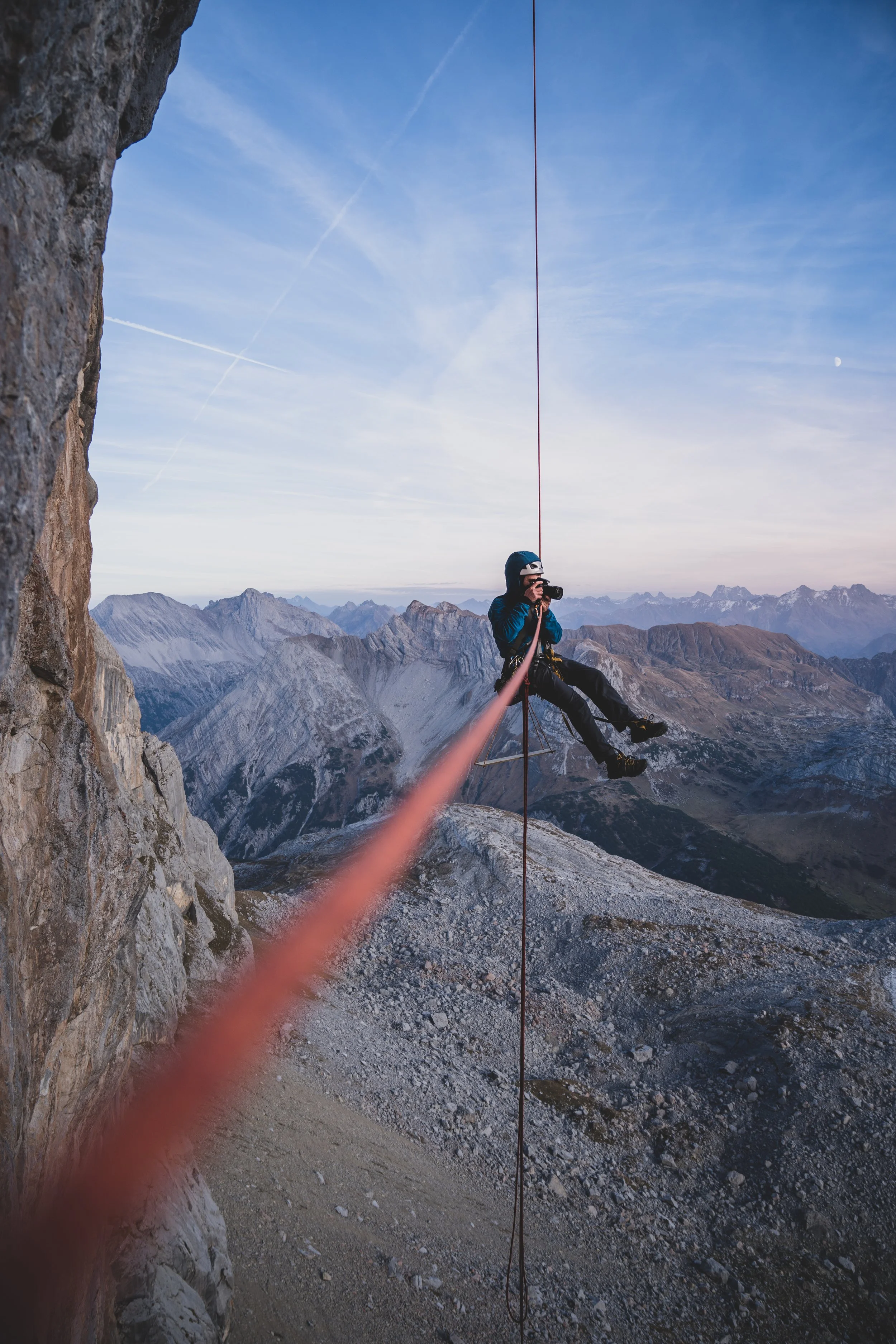
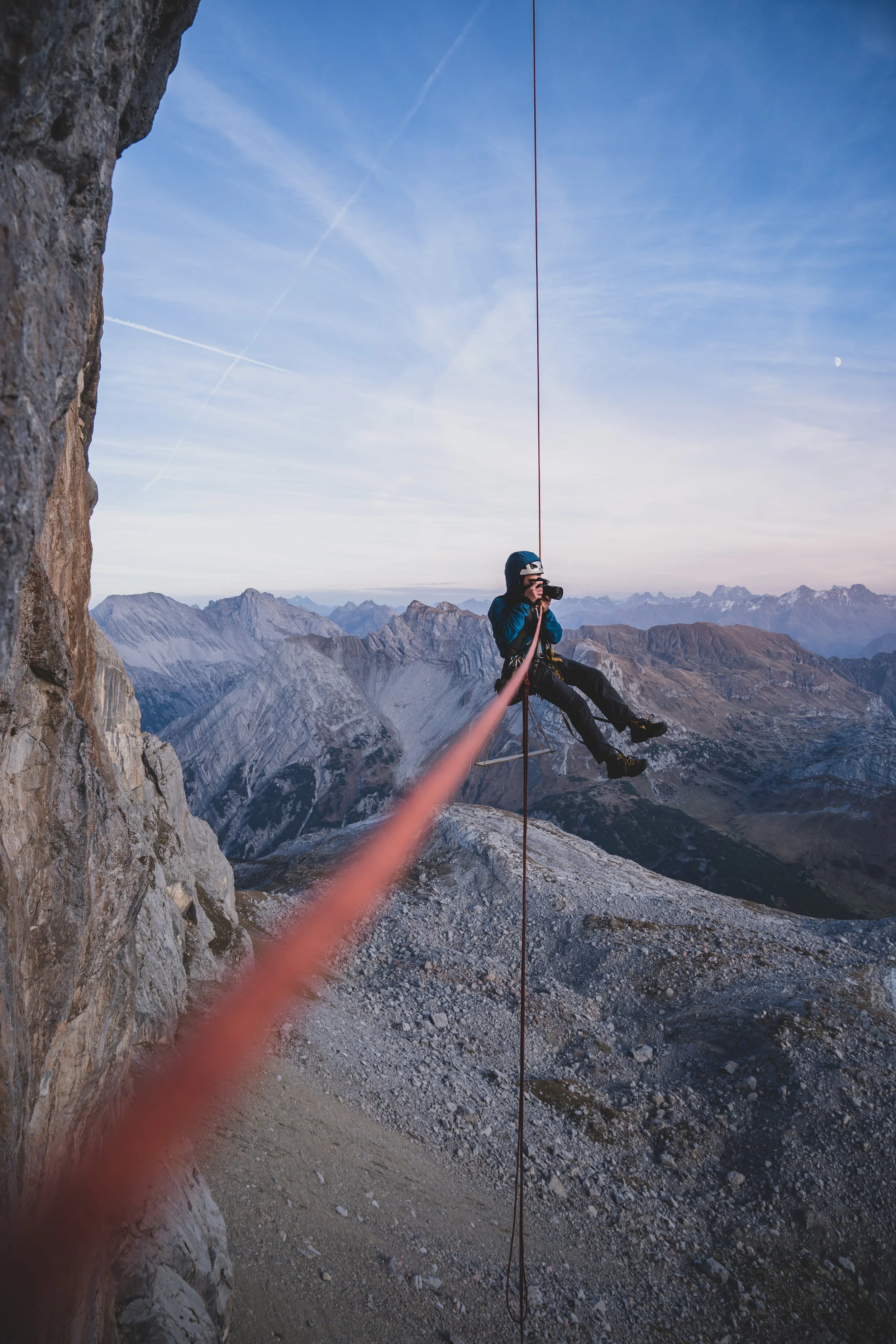
A younger version of myself in my climbing photography era, working with a Nikon D810 + 17-35mm f/2.8.
In the early 2010s mirrorless cameras felt like a curiosity. They were compact, yes, but autofocus was sluggish and battery life anemic. Many of us, myself included, dismissed them as travel cameras for city breaks. A lot has changed since then. Today’s mirrorless bodies feature the most advanced stacked sensors with readout speeds fast enough to capture birds in flight without rolling‑shutter distortion. They offer subject‑tracking algorithms trained on huge datasets of animals and birds, seamlessly shifting focus from a lion’s shoulder to its eye as it turns. Smaller, lighter form factors make carrying two bodies on a multi‑day trek far less punishing . Battery life remains a consideration, but manufacturers have made substantial gains, and a spare battery weighs far less than an extra DSLR body.
Even though they are mostly out of production, DSLRs haven’t disappeared. They are still built with the robustness of a hammer. Optical viewfinders provide a direct connection to the scene that some photographers will never relinquish. Their contrast‑detect autofocus systems, while less sophisticated than modern mirrorless AF, are mature and predictable. For static subjects like macro work and landscapes, or patiently waiting for a leopard in a tree, many DSLRs still excel. Used bodies and lenses have become very affordable, allowing newcomers to access high‑quality full‑frame imaging at a fraction of the price of flagship mirrorless kits.
Where mirrorless excels in the wild
Autofocus and tracking
The most significant leap in mirrorless performance is autofocus. Modern systems can recognize animal eyes, bodies and even specific subjects in a group, locking focus through foliage and across erratic flight patterns. On safari in Zambia last year I followed a fish eagle plunging toward the river; my R3 maintained focus from the initial glide to the splash, something even the best DSLR would have struggled to keep up with. Real‑time subject recognition isn’t just a gimmick; it frees your attention from the camera so you can anticipate behaviour. This is particularly helpful when teaching: I notice beginners gain confidence faster when they can trust the camera to handle focus.
Silent operation
The gentle click of a mirrorless shutter (or the absence of one when using an electronic shutter) is a small mercy for nervous wildlife. I’ve watched meerkats flinch at the rapid fire of a DSLR only to remain relaxed when I switch to a silent shutter. In bird hides the ability to work silently lets everyone share space without the intrusion of constant clatter. Be aware that continuous electronic shutters can produce banding under artificial light and may distort very fast movement, so having a mechanical option remains useful, but in 99% of wildlife scenarios, electronic shutter is the go-to these days.
Size and weight
Mirrorless systems shave hundreds of grams off bodies and lenses. On expedition or on long safari trips those grams accumulate. A Canon R5 with a 100–500 mm lens is almost a kilogram lighter than a 5D Mark IV with a 100–400 mm lens. When hiking dunes or navigating steep slopes in the mountains that difference keeps your shoulders and lower back fresher, enabling you to stay present and patient. Smaller bodies also travel more discreetly, something important when you’re moving through local communities before reaching the bush.
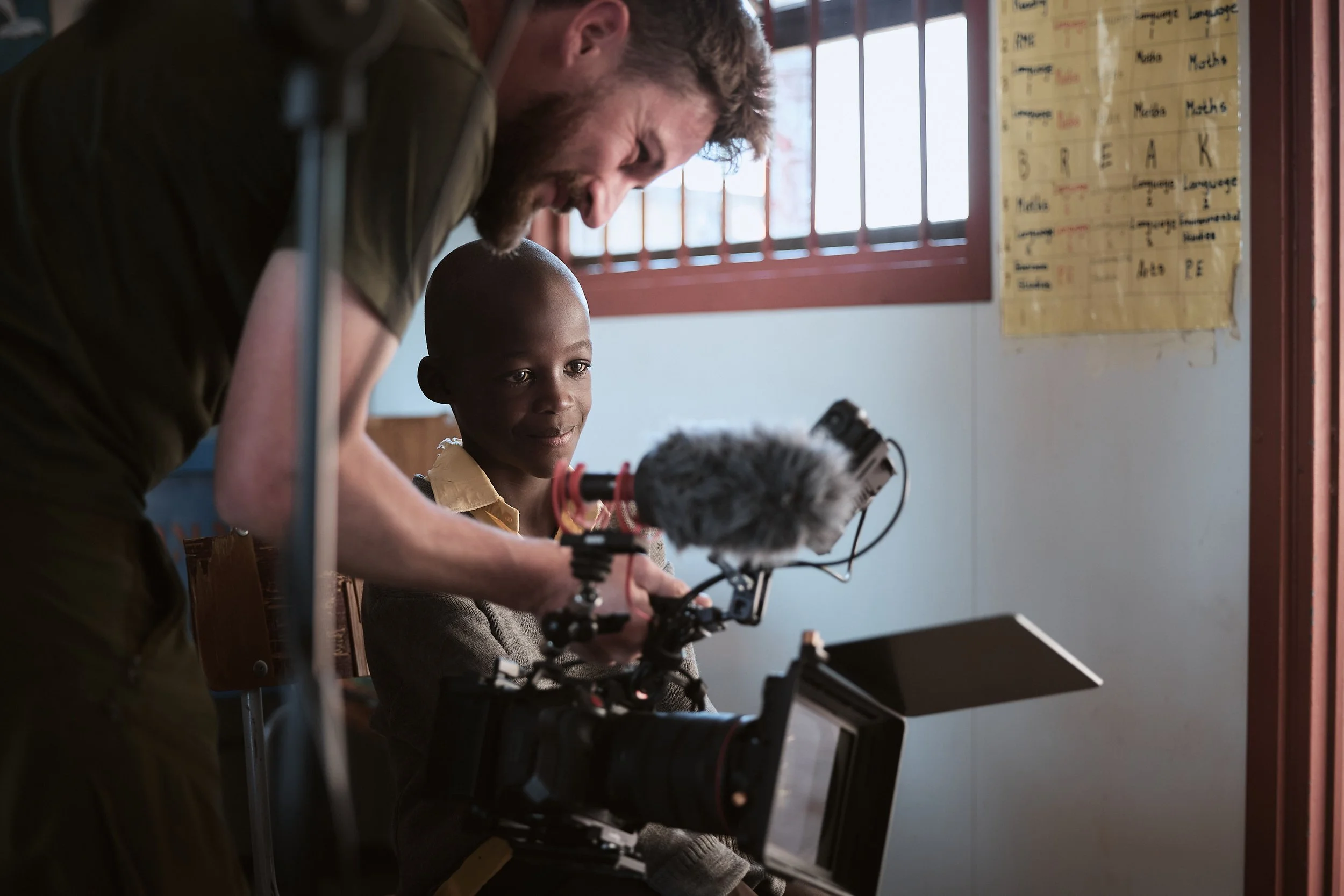
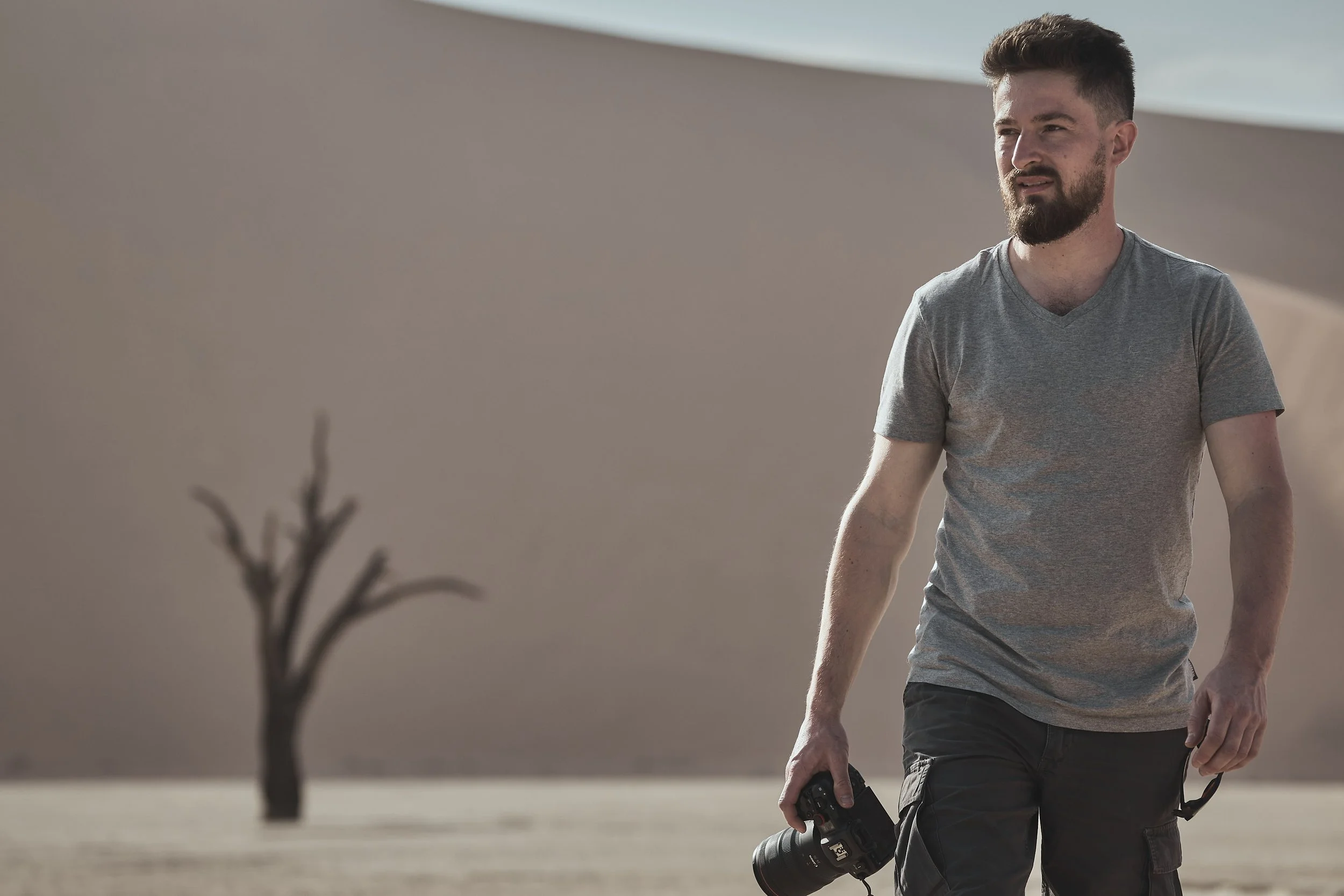
Another advantage of mirrorless cameras is the video capabilities; here I’m working on a documentary film in rural Namibia with a R5C rigged up to work as a lightweight cinema camera.
Electronic viewfinders and information overlay
While an optical viewfinder shows you the scene as it is, an electronic viewfinder (EVF) shows you the photograph as it will be. You see your exposure adjustments in real time, along with histograms, highlight warnings and focus peaking. In fast‑changing light, such as when a cheetah steps from shade into sun, this immediacy reduces the risk of blown highlights or crushed shadows. EVFs can also amplify faint starlight, making night composition easier when you’re lining up the Milky Way over a dark landscape.
Where DSLRs still have a place
Battery endurance and ruggedness
Even with the latest improvements DSLRs still outlast mirrorless bodies on a single charge, especially in cold environments. For long days in remote hides where recharging isn’t possible, that matters. Mechanical shutters, mirrors and pentaprisms might seem archaic, but they’ve proven their durability in brutal conditions. It’s still kinda easy to solve these problems with mirrorless, as we should just take a couple extra batteries, but is something worth noting.
Optical viewfinder and zero lag
There is an immediacy in optical viewing that most EVFs haven’t fully replicated. When I track birds of prey in flight, the uninterrupted clarity of an optical viewfinder makes it easier to follow erratic movement. There’s no blackout, no lag and no risk of a EVF flickering in low light. For many, this is a tactile pleasure as much as a technical choice.
Cost‑effective entry
The used market for DSLRs has become a treasure trove. A decade ago, a full‑frame body with a fast telephoto lens could cost more than a car. Today you can build a capable DSLR kit with a 7D Mark II or D500 paired with a 100–400 mm lens for a fraction of what you’d pay for a new mirrorless kit. For students or those unsure how committed they are to photography, this is an attractive route.
Beyond technology: fieldcraft and intent
It’s tempting to let gear debates dominate our thinking, but the truth remains: the camera is only as good as the mind and heart behind it. Knowing animal behaviour, understanding light and practising patience matter more than the badge on your body. I’ve seen photographers with entry‑level gear produce sublime images because they knew when to move, when to wait and when to put the camera down. Conversely, I’ve watched others fire thousands of frames with state‑of‑the‑art equipment yet come away with little more than digital noise.
When deciding between mirrorless and DSLR, ask yourself:
What do you photograph? Fast‑moving birds and mammals benefit most from mirrorless AF advances. Landscapes, macro and slower subjects can be captured beautifully with DSLRs.
How often do you travel? If you trek regularly, the lighter weight of mirrorless systems saves your back. If you mostly shoot from hides with little walking, weight matters less.
How important is silent operation? For skittish subjects or crowded hides, a silent shutter can be the difference between getting the shot and disturbing the moment.
What is your budget? Starting with a used DSLR kit may free funds for a lens upgrade or a workshop that deepens your skills.
What lenses do you own? If you have a stable of DSLR lenses, the cost of adapters and potential performance compromises should factor into your decision.
Choosing a system in 2026: practical examples
A first‑time safari participant might pair a crop‑sensor DSLR (like a used Canon 7D Mark II) with a 100–400 mm lens, spending under €2,000 for a very capable kit. They’ll enjoy fast AF, robust build quality and long battery life. This setup shines for someone drawn equally to birds and larger animals and the money saved could go toward booking a workshop (that will improve your photography much more than a new camera).
A seasoned photographer focusing on action (diving kingfishers, cheetahs sprinting across plains) will benefit from the 30 fps blackout‑free shooting and eye‑AF of a mirrorless body like R1 or A1II. Paired with a 100–500 or 200-600mm zoom, this kit covers nearly any wildlife scenario without adding too much weight. Expect to invest more, but the technology lets you capture moments inaccessible to older systems.
No camera will make you a better photographer on its own. What matters is how a system supports your way of working. Mirrorless is the present and future; manufacturers have signalled this with their development roadmaps and lens releases . At the same time DSLRs remain capable tools and for the next few years they’ll continue to create powerful images in skilled hands.
If you plan to grow into larger lenses and faster bodies over the next decade, investing in a mirrorless ecosystem now makes sense. The lenses you buy today will be relevant as sensors improve and AI features mature. If your interest is more casual, or if you already own a range of DSLR glass, there’s no urgency to abandon ship.
I often remind students that great photography isn’t about chasing spec sheets.
It’s about chasing light, stories and experiences. The debate between mirrorless and DSLR is ultimately a question of which tool best serves your intent. Mirrorless offers silent shooting, advanced autofocus and lighter weight; DSLRs provide robustness, battery endurance and the tactile pleasure of an optical view. Both can produce images that speak to the soul. Choose thoughtfully, practice with intent and invest your energy in learning the craft. If that speaks to you and you’d like to deepen your understanding of camera settings, composition and fieldcraft, regardless of your camera brand or type, consider joining my Sharp Photography Fundamentals course, where I cover the framework I use in every field outing to make sure I’m making the most of whatever camera and lens I’m using, in any situation.
And for those who want personalised guidance on building the right kit and honing their vision, my 1:1 mentorship programme offers tailored support to help you save money on gear and spend more time creating images that matter.