
Adventure Namibia
The true Namibian adventure

Trip highlights
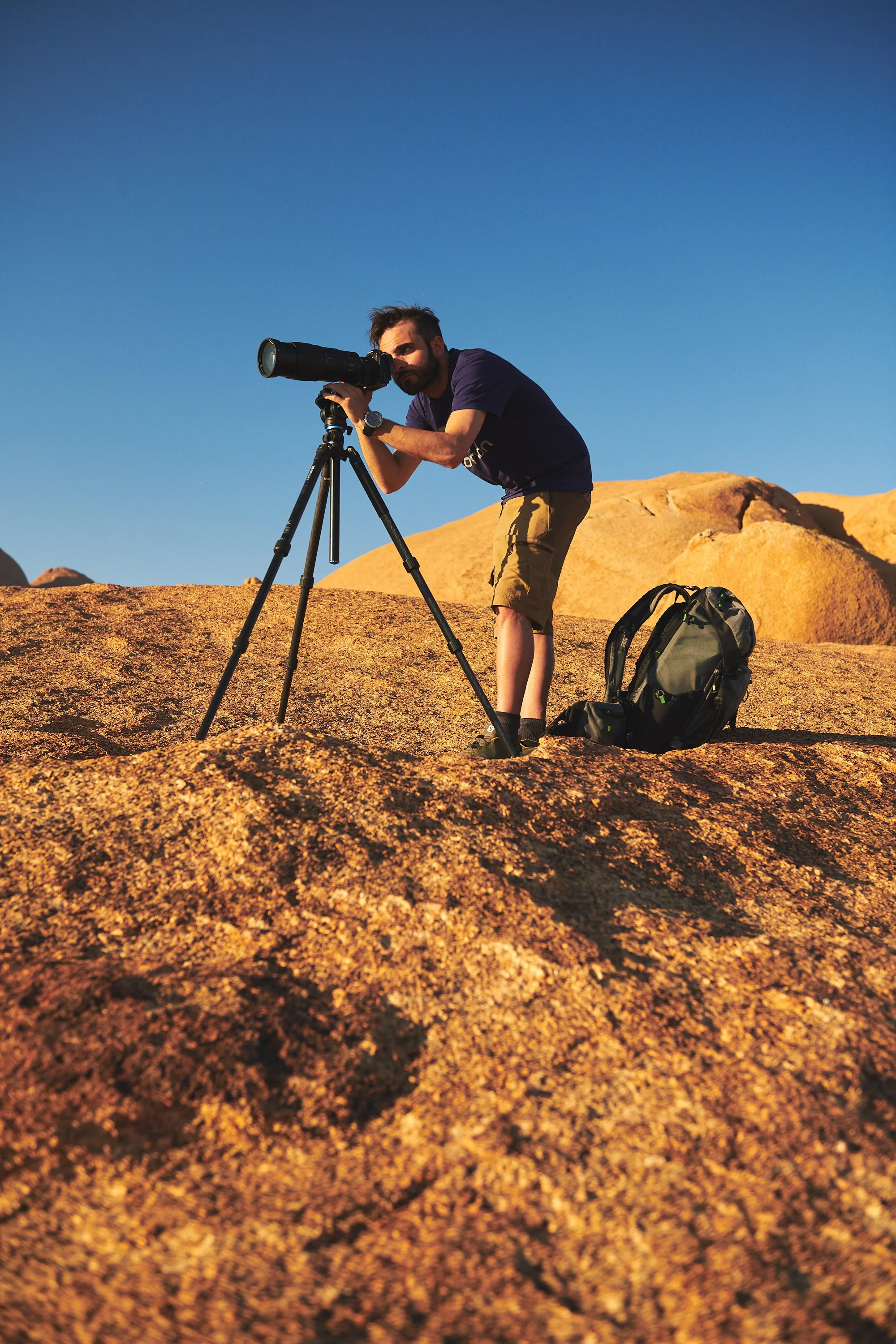
A small group of young photographers
This trip is exclusively for photographers under 35, creating a group with shared energy, mindset, and pace.
With only 6 participants + 2 guides, you’ll enjoy flexibility, longer time in the best spots and a relaxed environment where everyone can truly grow.
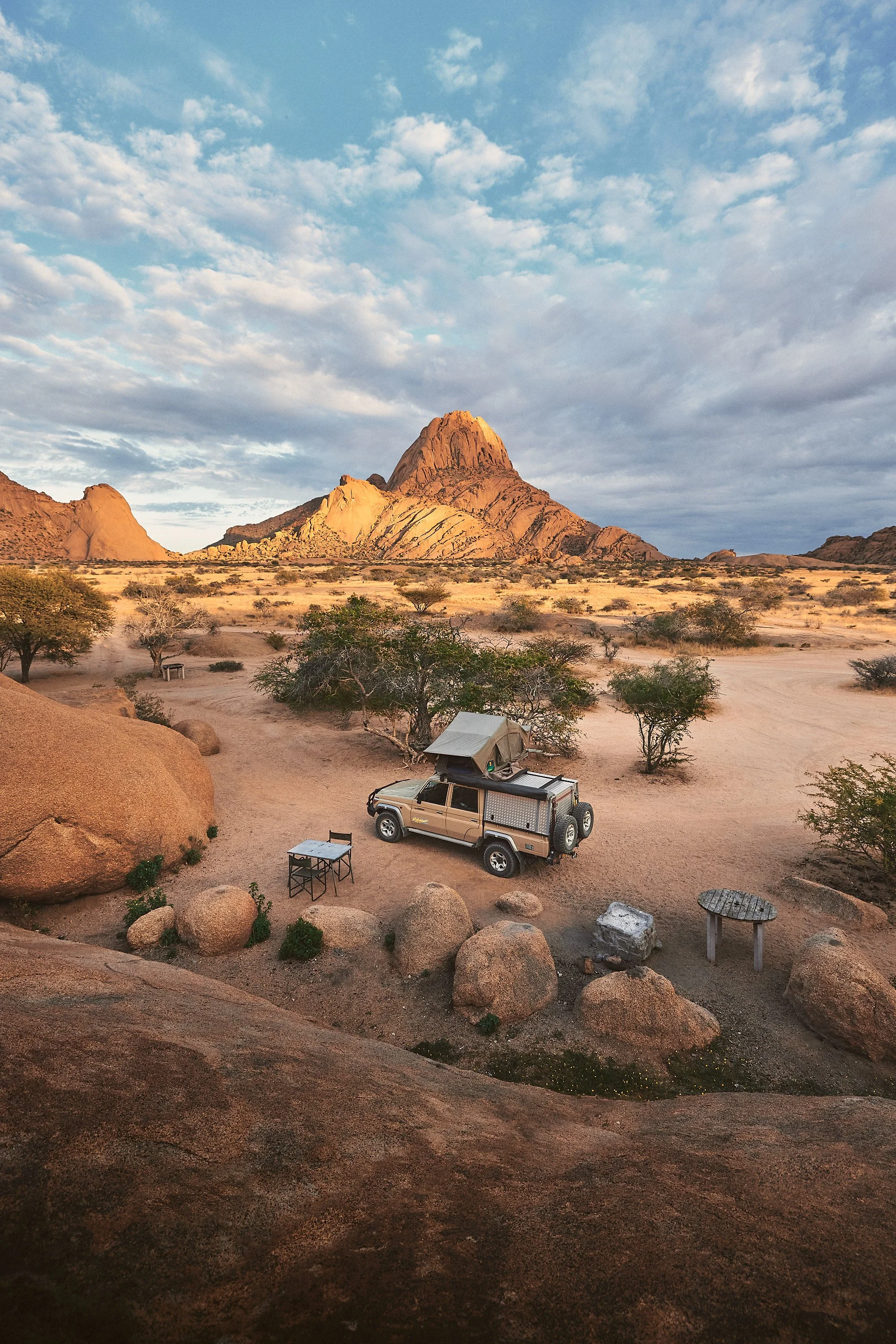
A real adventure across Africa
We’ll camp in remote, wild locations, fully immersed in nature but without sacrificing safety or comfort.
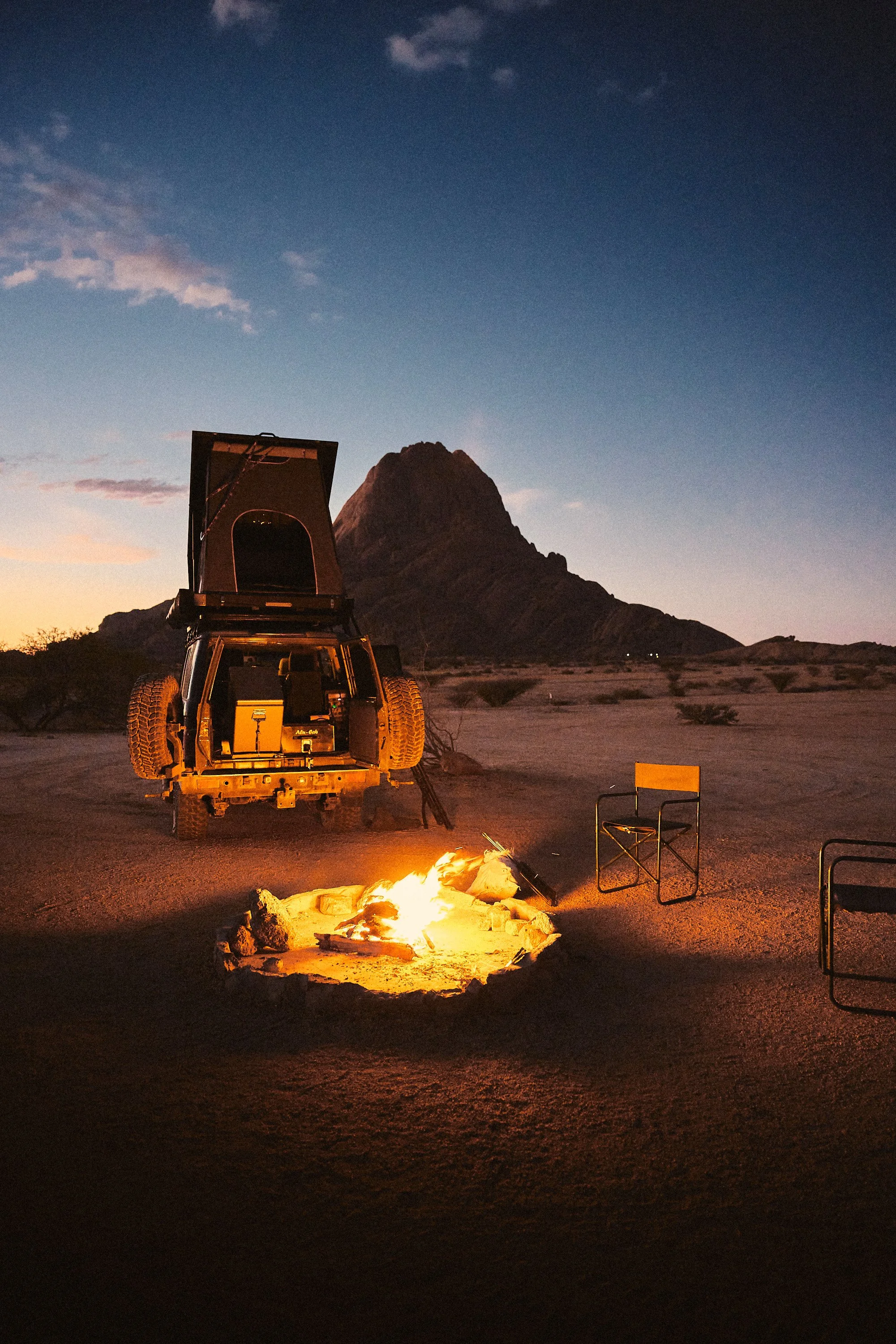
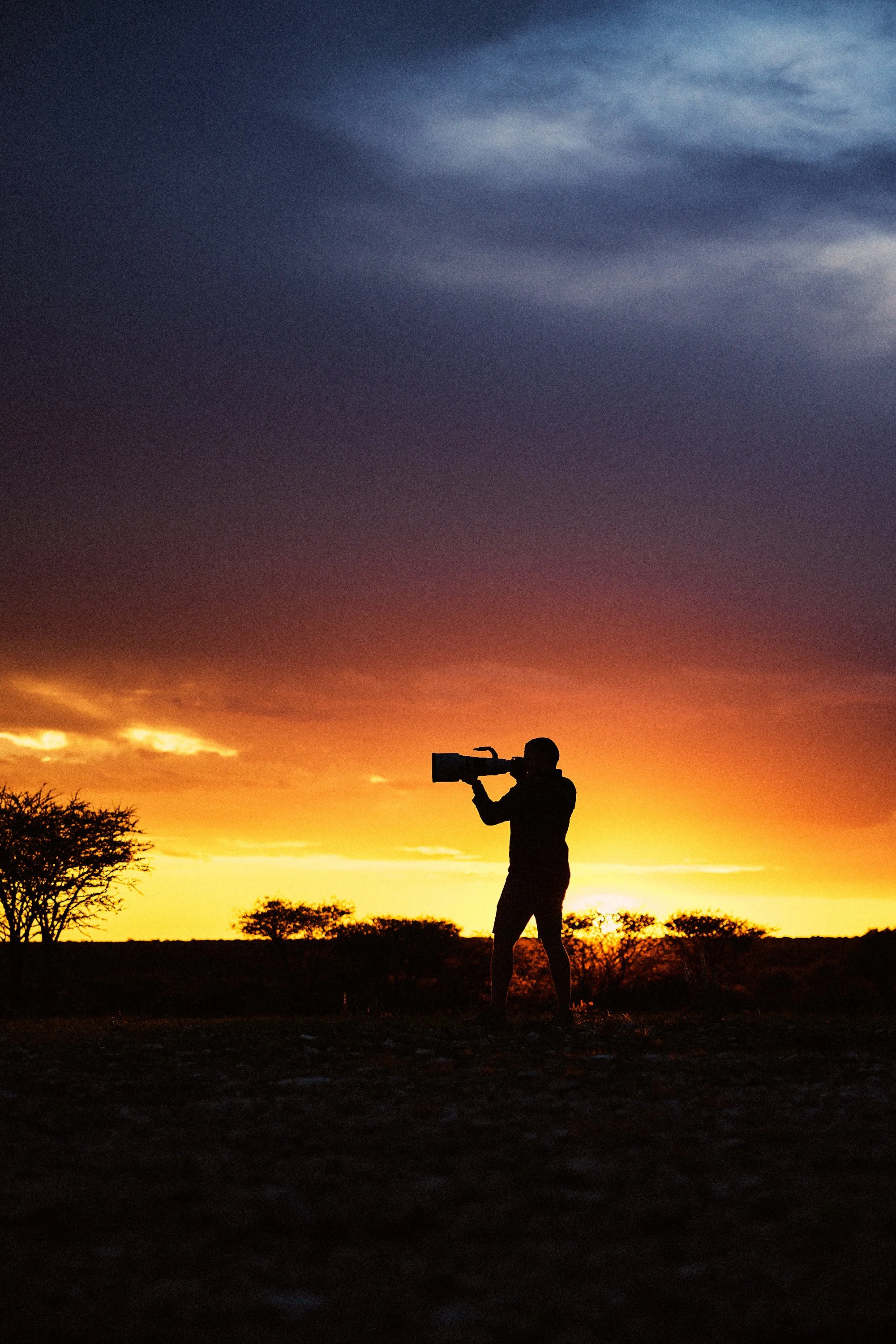
Camp life becomes part of the experience: cooking together, lighting the fire, telling stories and sharing the adventure with a group of like-minded young creatives.
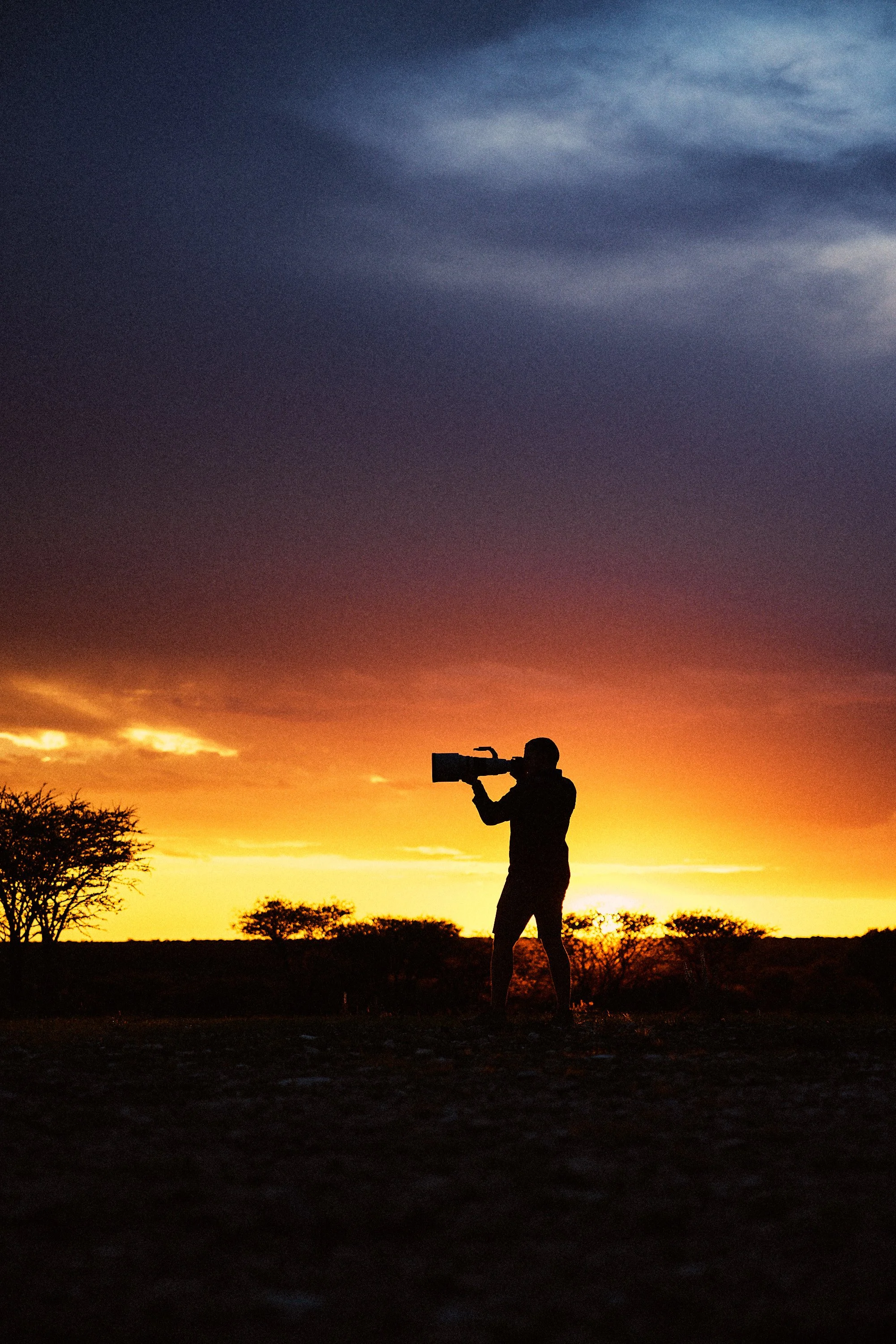
1:3 coaching ratio — learn faster, improve deeper
Two photography guides for just six participants means continuous support, personalised feedback and hands-on help in every situation.
Whether you’re just starting or already experienced, you’ll always have someone next to you helping you refine technique, storytelling, and camera control.
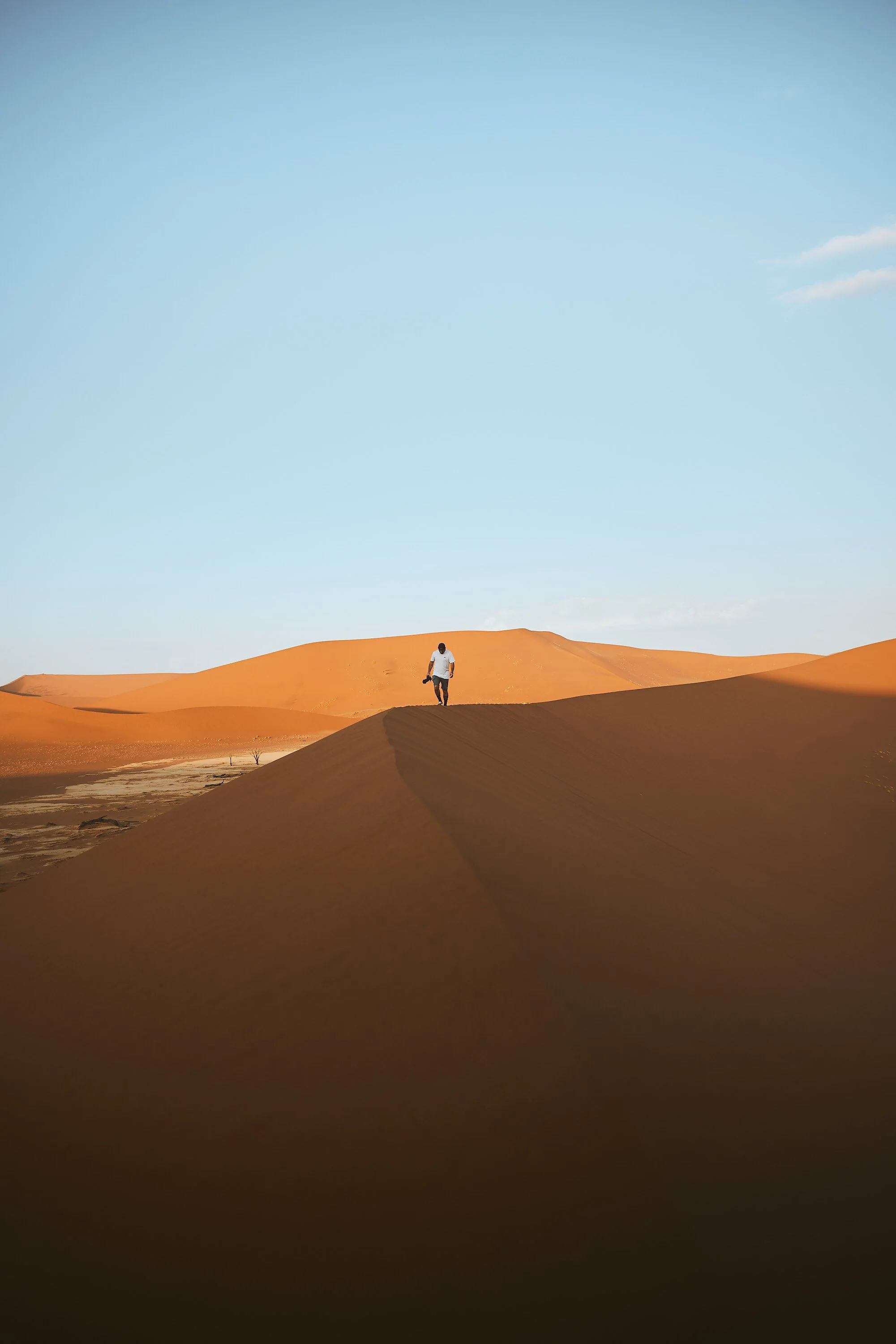
Always in the right place at the right time
From sunrise access to Deadvlei and Kolmanskop to night permits for photographing the Milky Way in magical locations like Quiver Tree Forest, every detail is planned around light and timing.
You’ll shoot iconic landscapes and wildlife in the best possible conditions—no rush, no crowds, just pure photography.
Only 6 spots available for this incredible experience!
When?
May 19 - June 2, 2027
Group Size
6 guests + 2 guides
Price
3400€ (excl. park fees, gas & food)
+
800€ kitty cash fund *
* Shared Travel Costs
To keep the tour price as fair and transparent as possible, certain on-the-ground expenses (fuel, park fees and shared food supplies) are managed through a common fund during the trip.
This approach ensures that these real costs are covered at their actual value, without any markup or added margin.
FITNESS LEVEL
Easy overall, but participants must be prepared for heat.
Some locations require short walks of up to 20 minutes (unless you choose to climb a dune in Sossusvlei, which may take up to 1 hour).
Throughout the trip, every participant will take part in basic camp duties: setting up and taking down tents, lighting the fire, preparing meals, and helping with daily logistics.
It’s all part of the adventure and the immersive experience.
EXPERIENCE REQUIRED
This trip is open exclusively to photographers under 35, from beginners to more advanced shooters.
• Beginner photographers will learn directly in the field, with constant support, hands-on guidance, and practical explanations.
• More experienced or professional photographers will have the chance to refine their skills, explore new techniques, and build a unique portfolio with the support of two expert photography guides.
No previous camping or wilderness travel experience is required — just a spirit of adventure, willingness to collaborate, and openness to trying something new.

What Makes This Trip Special

After many journeys across every corner of Namibia and South Africa, we’ve crafted an exclusive itinerary that combines the country’s most iconic locations with a true adventure experience in the wild.
From the spectacular Kgalagadi Transfrontier Park (KTP)—one of the last truly remote wilderness areas in Africa—to the red dunes of the Namib Desert, every stop has been carefully chosen to guarantee perfect light and exclusive access to the best shooting locations.
This is not a typical organized trip:
it’s a full expedition-style photography workshop.
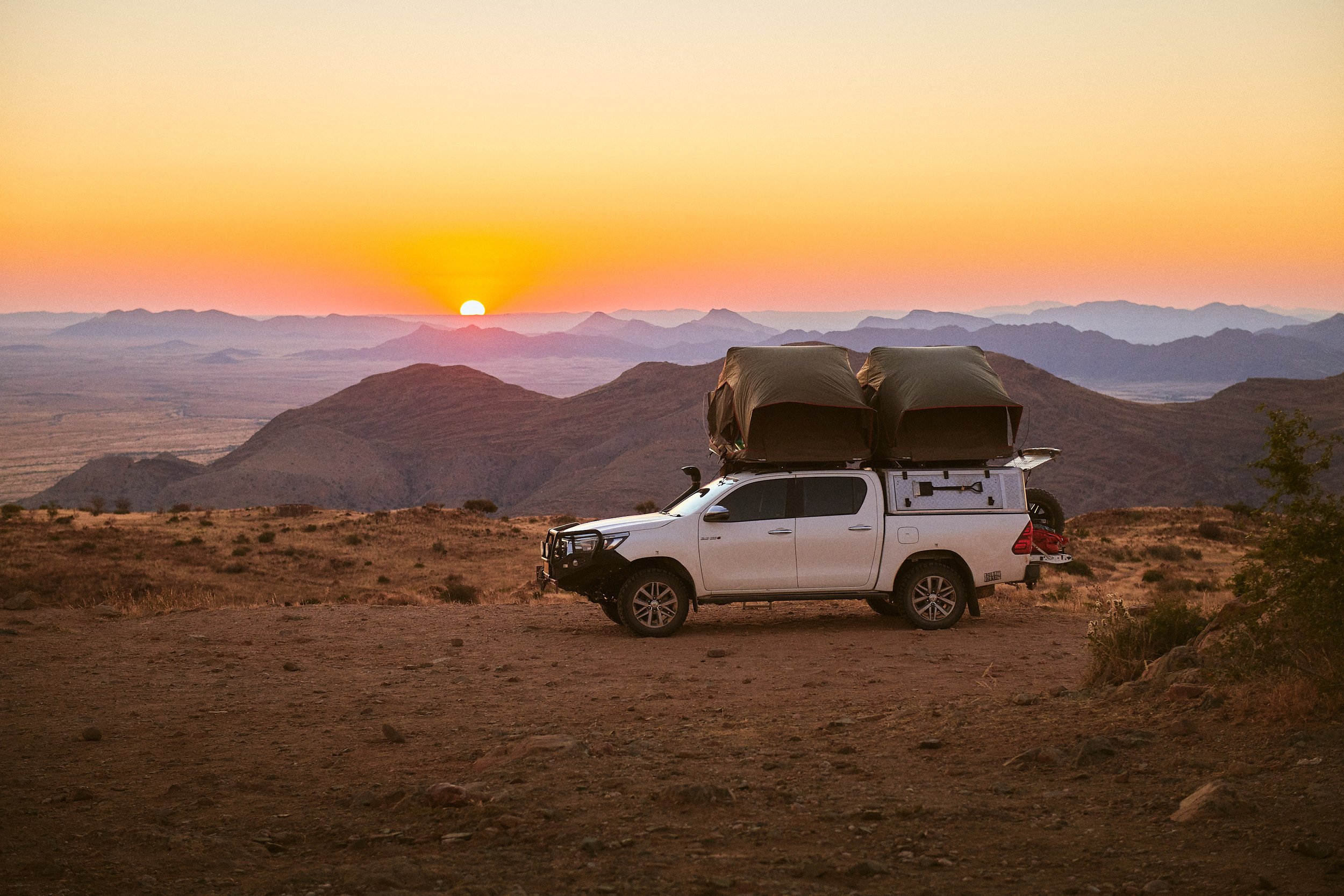
We’ll sleep in rooftop tents on 4x4 vehicles, travel in small groups (6 participants + 2 guides), and live in close contact with nature, collaborating in daily camp life, cooking, and logistics.
An immersive, hands-on adventure—raw, authentic, and unforgettable.
Every session is tailored to your level:
Whether you’re a beginner taking your first steps or an emerging photographer ready to level up, you’ll receive constant support, personalised feedback, and the chance to shoot side by side with two professionals in some of the most photogenic locations on the planet.
We’ve chosen each date with great care—following seasonal wildlife patterns, the position of the Milky Way for astrophotography, and moon phases to ensure perfectly dark skies.
Every day is built around photography, but lived with the spirit of real adventure.
What will we see?

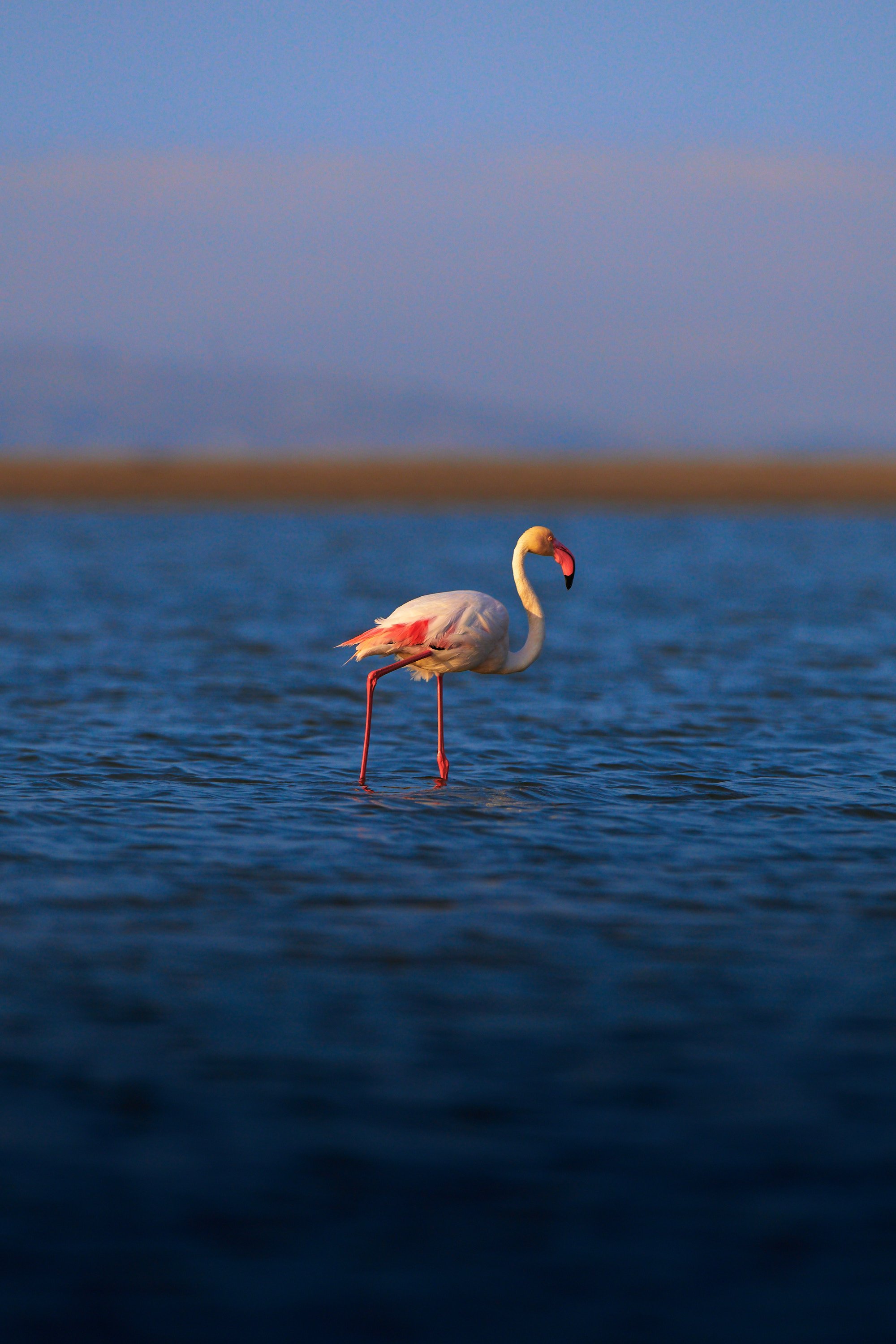

During the workshop, we’ll travel across some of the most iconic and spectacular landscapes of Namibia. The main locations include:
🌵 Quiver Tree Forest, for night sessions and astrophotography under perfectly dark skies
🏚️ Kolmanskop, the famous ghost town reclaimed by the desert — a paradise for landscape and architectural photography
🌊 Lüderitz, a coastal town with a unique atmosphere where the Atlantic Ocean meets the desert
🏜️ Sossusvlei, home to some of the tallest and oldest dunes in the world
🌅 Deadvlei, with its surreal petrified trees offering endless photographic opportunities
🌊 Swakopmund and Walvis Bay, oceanfront towns perfect for coastal photography and moments of relaxation
🗻 Spitzkoppe, the iconic rock formation known as the “Matterhorn of Africa,” is spectacular for night photography and sunsets
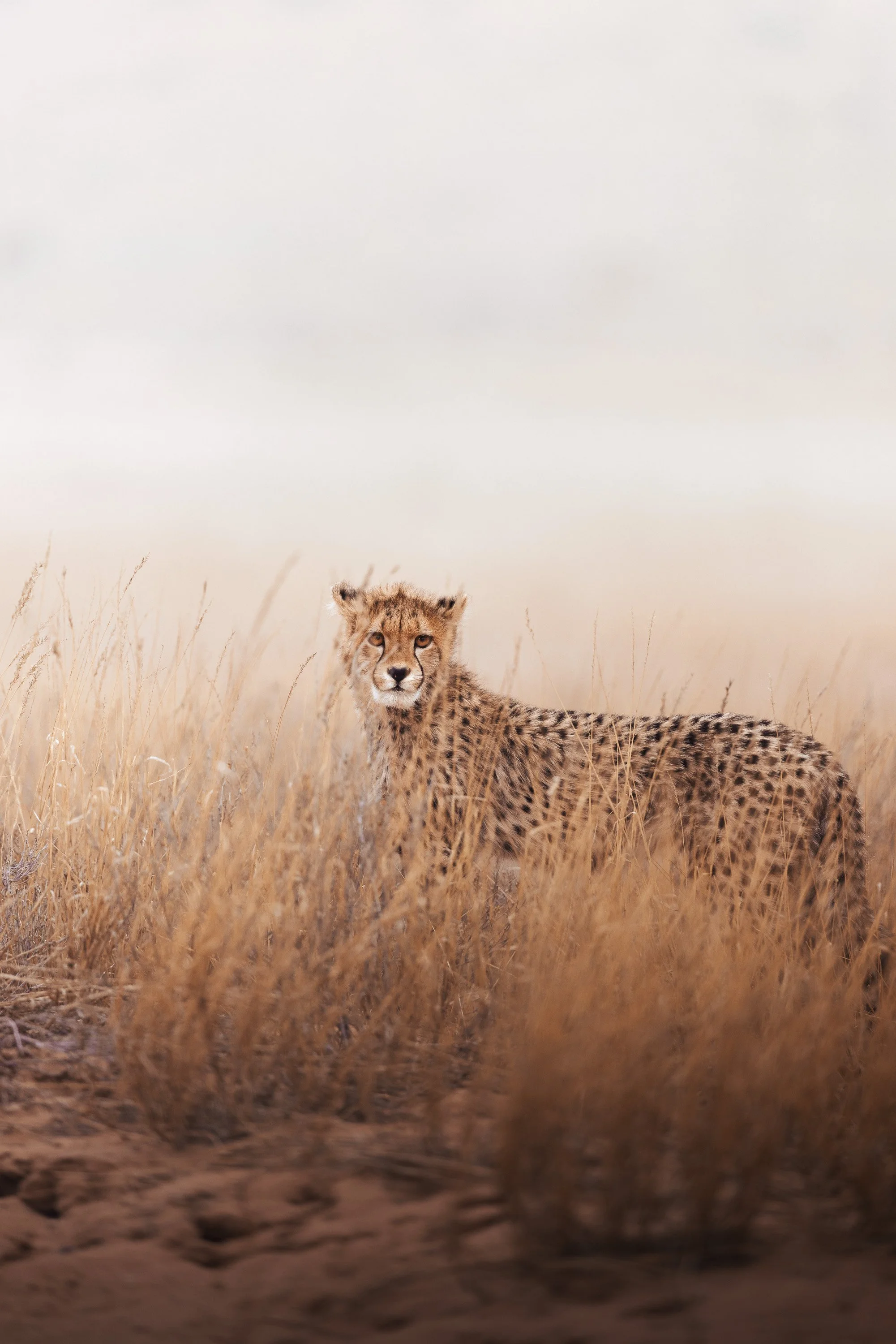
🦁 Etosha National Park, where we’ll spend 5 nights exploring sandy tracks and remote wilderness in search of predators, wild cats, black rhino, and many other iconic species.
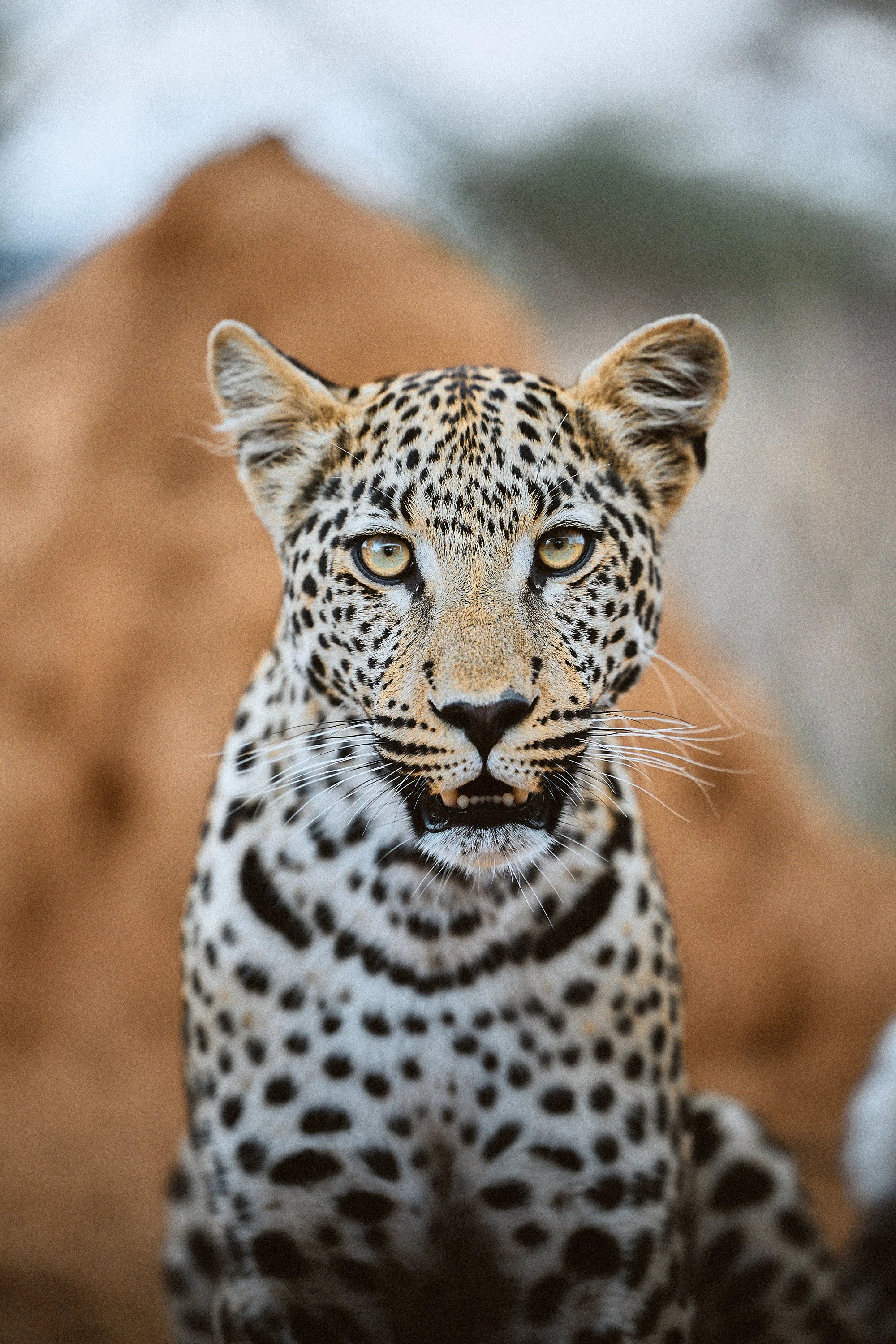
You’ll have the chance to photograph giraffes, oryx, zebras, warthogs, bustards, lions, hyenas, jackals, leopards (if we’re lucky), and many other animals typical of the desert environment.



What will you learn?
Fine-tune your camera settings for landscape, wildlife, night photography and creative shooting
Understand light and choose the correct exposure in any situation
Compose harmonious and balanced images, from vast landscapes to environmental animal portraits
Use shutter speed and aperture creatively to produce unique photographs
Choose the right lens based on your vision and the results you want to achieve
Create wide panoramas by stitching multiple images in post-production
Astrophotography techniques and composition to photograph the night sky
Wildlife photography in the field: approaching subjects, managing challenges, and making technical choices in wild environments
Basic post-production concepts and backup strategies to avoid losing your shots
Expedition gear management: powering and protecting cameras, batteries, and drives in remote areas
Fundamentals of self-drive safaris: where to position yourself, how to behave during sightings, key rules
Basic driving techniques on sand and autonomous vehicle handling
Camp management: setting up tents, fire, meals, sharing tasks, and expedition daily life
Day by day itinerary
Day 1
Arrival at Windhoek International Airport (WDH) at any time during the day.
You’ll be met and transferred to our accommodation in Windhoek, where the group will begin to come together.
This first day is intentionally relaxed, giving everyone time to settle in, recover from travel, and start getting to know the team who will share this adventure.
In the afternoon, we’ll head out for a short stop in town to stock up on groceries, snacks, and any last personal items needed for the days ahead.
Toward sunset, we’ll gather for a casual introduction session, an opportunity to meet your fellow travellers, go over the journey ahead, and set the tone for the experience.
In the evening, we’ll enjoy our first group dinner together.

Day 2
Early breakfast and departure from Windhoek between 8:00 and 9:00 AM.
Today is a long but rewarding travel day as we make our way north toward Etosha National Park, one of Africa’s premier wildlife destinations.
The journey takes us through ever-changing landscapes, from the central highlands to the open savannah, offering a first real taste of Namibia’s vastness and scale.
Arrival in the Namutoni area of Etosha is expected in the late afternoon. After setting up camp and settling in, we head straight out for our first sunset game drive.
This is often one of the most magical moments of the day, as wildlife becomes active and the golden light transforms the landscape.
Day 3
Wake up at first light, around 5:30 AM, to catch the most active hours for wildlife.
After a quick breakfast, we head out for our first safari session, exploring the eastern side of Etosha. Expect encounters with giraffes, elephants, zebras, antelope, and, with some luck, predators such as lions or hyenas.
Return to camp late morning to rest during the heat of the day. Time to relax, share stories, review photos, or simply enjoy the rhythm of the bush. In the afternoon, we head out again for a second game drive, staying out until sunset.
Day 4
Another early start, making the most of golden morning light. Today, we continue exploring the Namutoni region, focusing on waterholes, key gathering points for wildlife and excellent for observation and photography.
Late morning return to camp for rest and downtime.
In the afternoon, we begin moving westward toward Halali, slowly transitioning into a new area of the park with different landscapes and wildlife dynamics.
Sunset drive en route, arrival at Halali.
Day 5
Full days based in the Halali region. Morning safari at first light, exploring new terrain and tracking wildlife activity across this central part of Etosha.
Midday rest at camp, recharge, review images, or simply enjoy the stillness.
Afternoon game drive with a focus on light, composition, and behaviour, often a great time for elephant and predator sightings. After dinner, an optional visit to the nearby floodlit waterhole for nighttime wildlife viewing.
Day 6
Final morning safari in Etosha , one last chance to capture the magic of the park.
After breakfast, we begin moving west toward Okaukuejo, famous for its iconic waterhole and open plains. We’ll spend the afternoon exploring this area, often rich in large herds and dramatic scenes.
Sunset at the waterhole, followed by dinner and our final night inside Etosha.


Day 7
After a relaxed morning and breakfast, we leave Etosha behind and begin our journey south toward Spitzkoppe, also known as the “Matterhorn of Africa”: a massive granite mountain surrounded by breathtaking desert landscapes.
We’ll arrive early to secure the best camping spot, in an area that gives us direct walking access to the top photographic locations.
We’ll spend the afternoon exploring freely among rock arches, giant boulders, and golden light, searching for unique compositions in the heart of the desert.
After dinner, we’ll dedicate the evening to astrophotography, especially at Spitzkoppe’s iconic rock arch, which we’ll photograph under a sky full of stars.
Day 8

Sunrise session at Spitzkoppe, soft light transforming the landscape into something almost otherworldly.
After breakfast, we pack up and head toward the coast, arriving in Swakopmund in the afternoon.
Important: be ready for a dramatic climate shift! The coast can be cold and foggy, very different from the desert heat we’ll be leaving behind.
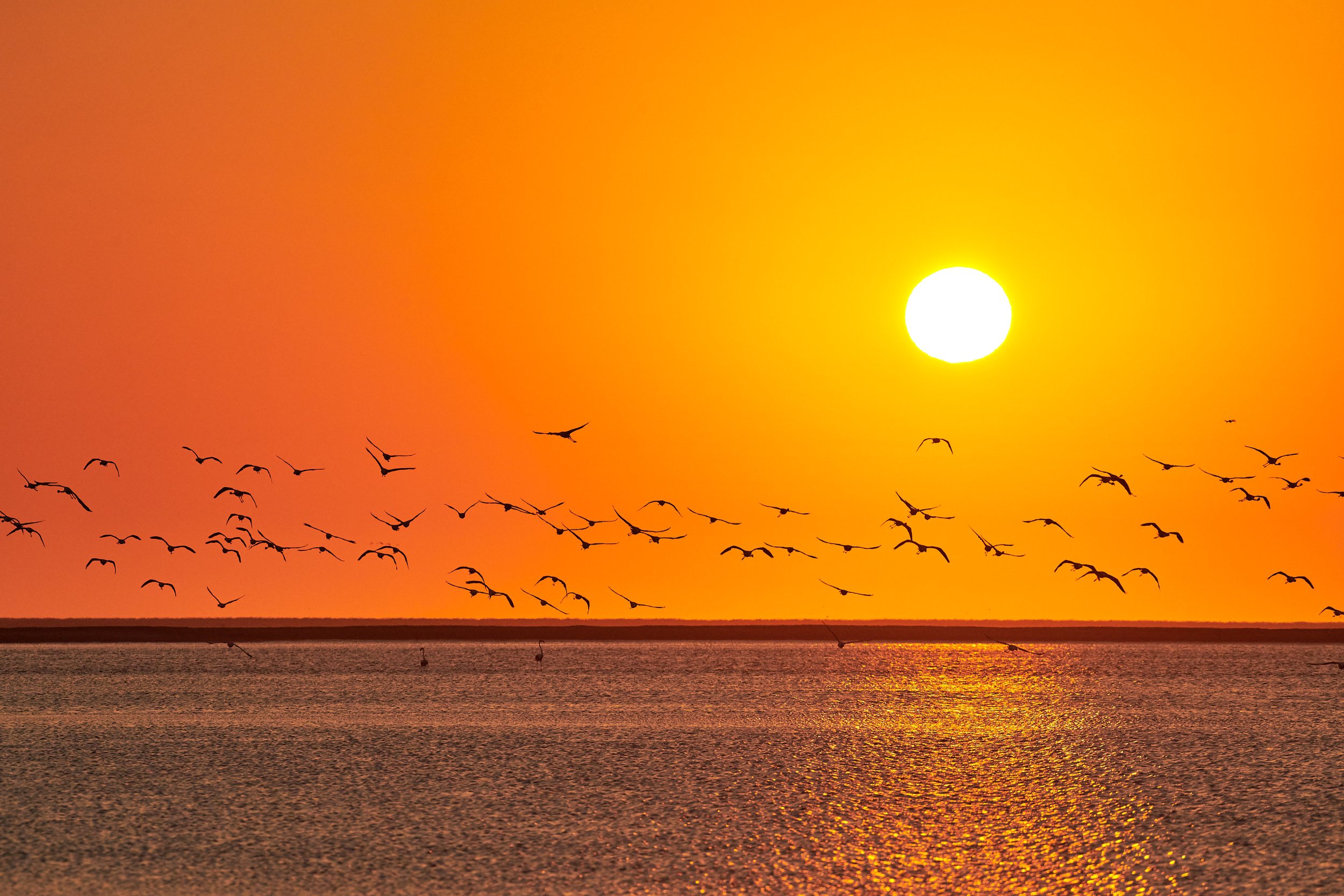
After checking in at a boutique guesthouse on the edge of the dunes, we’ll head to the Walvis Bay lagoon, one of the best places in the world to photograph pink flamingos, often present in colonies of tens of thousands.
Alternatively, we may choose to explore the coastal dunes at sunset, playing with sand curves and the surreal atmosphere where the ocean meets the desert.
Dinner in a local restaurant in Swakopmund and, for those who wish, optional personalized portfolio reviews with Paolo and Roberto.

Day 9
This day is completely free, allowing everyone to recharge, manage photo/video backups, or join one of the many optional activities available in Swakopmund.
Among the most popular activities:
• Scenic flight over the Namib Desert at sunrise, by plane or helicopter
• Boat excursion in Walvis Bay, searching for whales, dolphins, and pelicans
• 4x4 trip to Sandwich Harbour, where towering dunes plunge directly into the ocean
• Free exploration of the town, with its cafés, markets, German-style architecture, and excellent bakeries
These activities are not included in the participation fee. A detailed list with all available options and related costs will be provided to participants before departure.
Alternatively, you can simply relax, explore the town, work on selecting your best images, or join one-on-one photography coaching sessions with Paolo or Roberto.


Day 10
After breakfast, we begin our journey toward one of the most iconic destinations in African photography: Sossusvlei, in the heart of the Namib Desert. The transfer takes about 5 hours, through landscapes that become increasingly arid and majestic.
During the drive , we’ll make a short stop in the iconic settlement of Solitaire.
Once we arrive, we head straight into the Namib-Naukluft National Park, where we will spend the night at a campsite located inside the protected area. This is a major advantage for photographers: staying inside the park grants exclusive access before sunrise and after sunset, while those sleeping outside are restricted by standard gate hours and miss both golden moments.
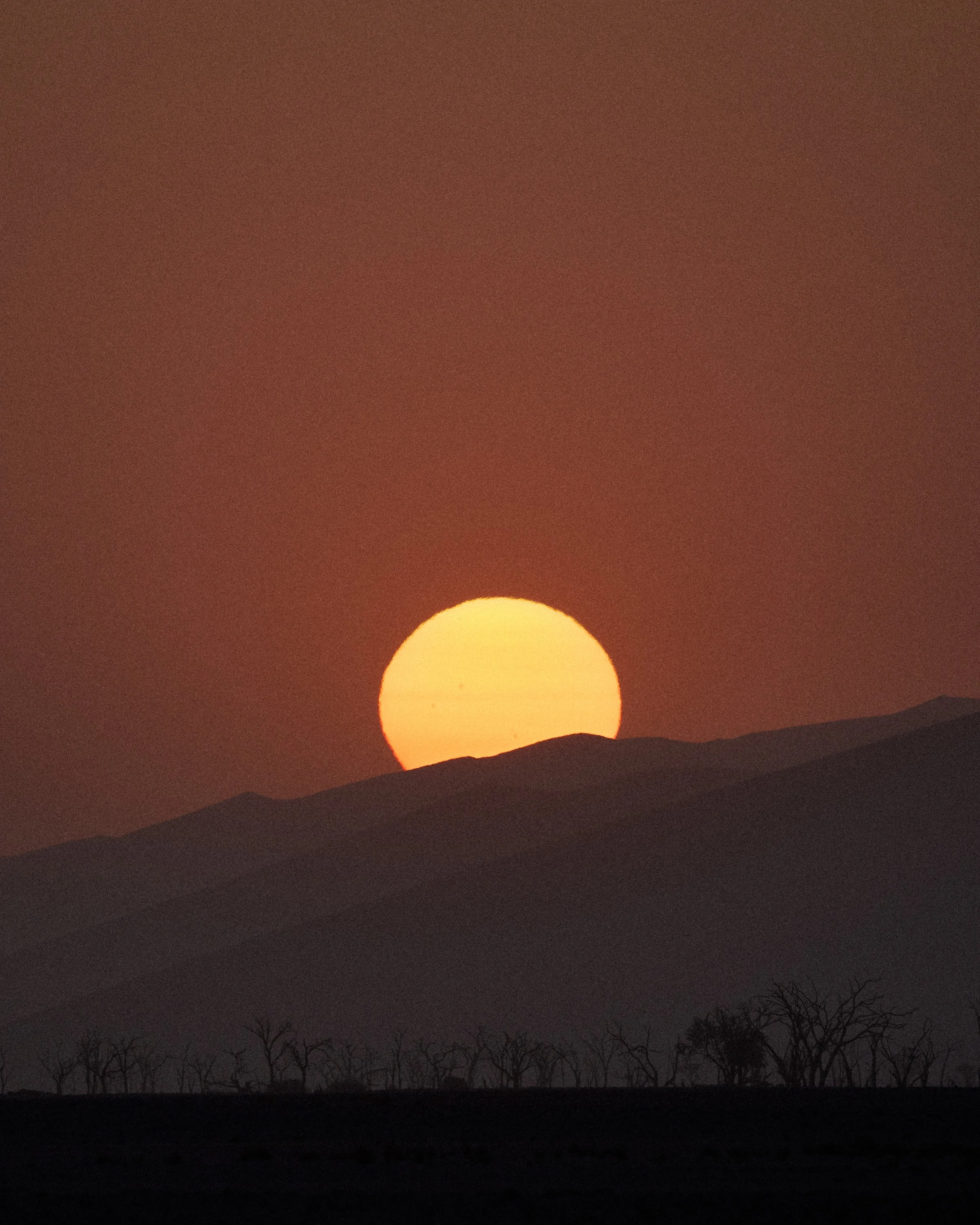
In the afternoon, we prepare for our first photography session among the dunes, exploring the Dune 45 area, where we’ll be able to play with long shadows, perfect curves, and striking light contrasts during the golden hour. Afterwards, dinner at camp and preparation for the long day ahead.


Day 11
Wake-up call very early and departure about one hour before sunrise to reach Deadvlei with the perfect early-morning light.
We’ll drive roughly 70 km (the last 6 km on deep sand) to reach the parking area, followed by a short walk through the dunes to arrive just in time for the first rays of sunlight.
Photographing Deadvlei at sunrise is a unique experience: the contrasts between the dead trees, the red sand, and the blue sky create stunning visual opportunities, especially before the harsh light and the arrival of tourists.
Return to the campsite for a hearty breakfast followed by a few hours of rest.
In the afternoon, we head back into the desert for a sunset session among the Sossusvlei dunes, working on shapes, textures and composition as the light becomes softer.
Once back, we set up camp as usual, enjoy dinner, and get some well-deserved sleep.

Day 12
After one final sunrise session before breakfast , a last chance to capture this magical place among the dunes ,we set off towards a new stretch along the Atlantic Coast.
In the afternoon, we arrive in Lüderitz. Depending on the weather, we’ll decide together whether to:
• do an initial scouting session in the ghost town of Kolmanskop, or
• explore the lunar landscapes of the southern Lüderitz peninsula, with seals, ocean views, and dramatic cliffs.
Dinner in a local restaurant in town.


Day 13
Wake-up before sunrise for an exclusive photo session in Kolmanskop, the abandoned mining town slowly reclaimed by sand.
Thanks to a special permit, we’ll be able to enter well before the public opening, with perfect light to capture shadows, textures, and atmosphere.
After the session (approximately 06:30–08:30), we return to Lüderitz for breakfast, checkout, and to restock supplies.
After a deeper exploration of the Lüderitz peninsula, we then head inland toward Keetmanshoop.
We’ll visit Giants Playground, a spectacular maze of basalt rock formations, perfect for creating surreal, abstract compositions at sunset.
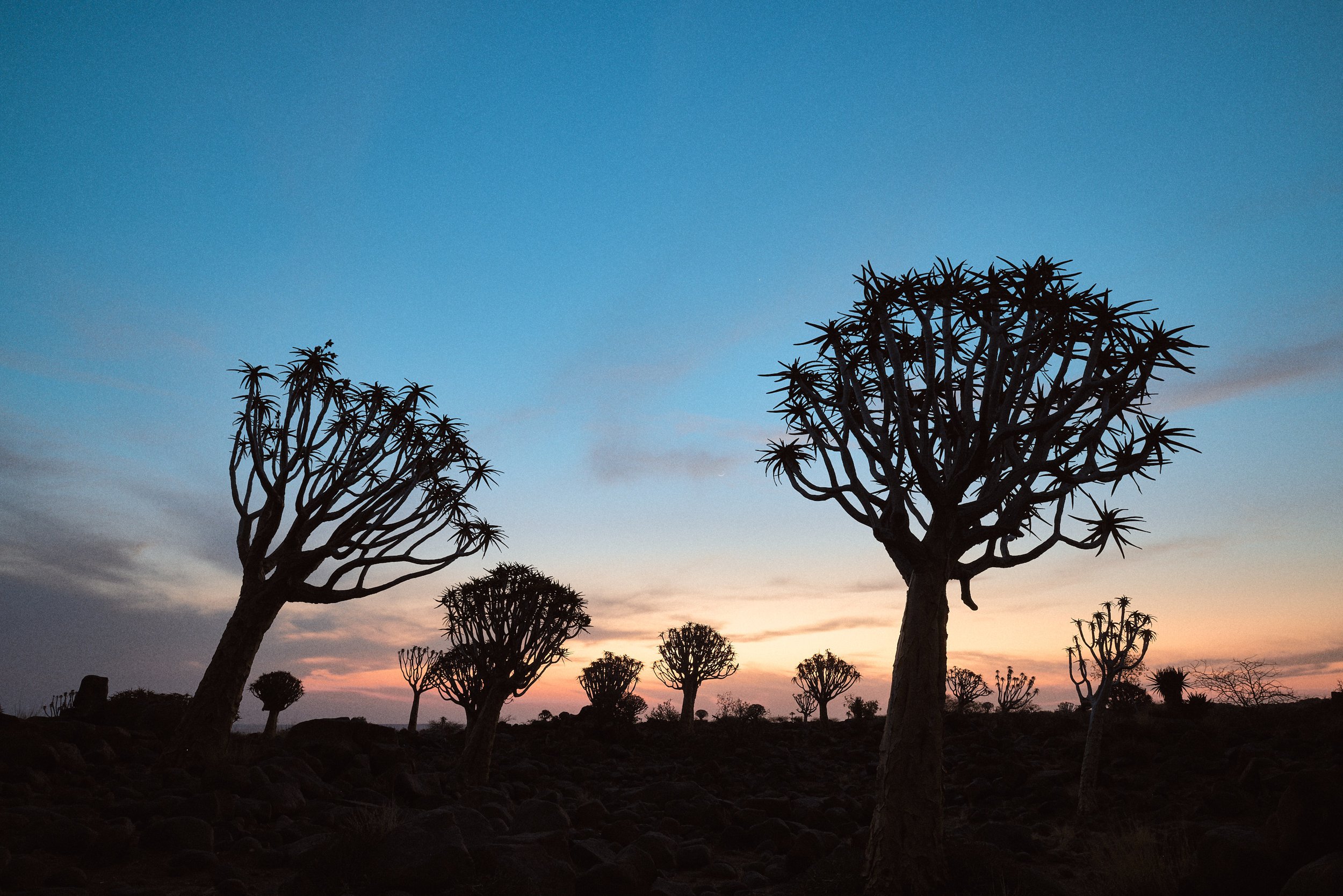
The evening brings one of the most special moments of the entire trip: an astrophotography session at the Quiver Tree Forest, where we’ll have a special permit for night access. With the new moon, we’ll be in the best possible conditions to capture the Milky Way rising behind the twisted silhouettes of the aloe dichotoma trees. A truly unique photographic and sensory experience.


Day 14
Wake-up before sunrise for a session among the Quiver Trees, when the golden dawn light turns the landscape into a dream.
After making the most of the early morning light, we’ll pack down the tents, enjoy a relaxed breakfast in Keetmanshoop ,and begin our drive back toward Windhoek. In the afternoon, we settle into a comfortable hotel in the city.
Depending on timing and energy levels, it will be possible to schedule final 1:1 sessions with Paolo or simply enjoy some free time.
In the evening, we’ll gather for a final dinner together at one of the best restaurants in the capital, a warm, authentic way to close the journey.
Day 15
After breakfast, there will still be time for those who wish to deepen their photographic journey with an individual portfolio review or a discussion about the next steps in their creative growth.
Anyone who prefers can explore Windhoek independently, visiting its most interesting areas for some last-minute shopping or a few final urban shots.
In the afternoon, we transfer to the airport according to flight schedules.
Only 6 spots available for this incredible experience!
-
Continuous photographic assistance from Paolo Sartori and a local professional guide throughout the entire trip
All transfers and internal transportation (to/from Windhoek Airport – WDH); we will use 2 fully camping equipped Toyota Hilux vehicles with rooftop tents, with 4 people per vehicle
9 nights of wild camping in extraordinary locations
4 nights in selected guesthouses to recharge halfway and at the end of the trip
Shared tents and rooms (2 people per unit)
All tourism taxes and park entry permits included
Plenty of time dedicated to Q&A and individual sessions to help you improve your photographic journey, both technically and creatively
Access to a private WhatsApp and Facebook group to share ideas, prepare for the trip, and stay connected with the group even after the workshop
-
Flights to/from Windhoek (Namibia)
Meals and drinks: we will manage a common fund to purchase food and beverages for camping (breakfasts, lunches, dinners); at restaurants, each participant will pay for their own meal or we will split the bill evenly
Credit card payment surcharges
Personal expenses (snacks, souvenirs, local SIM cards, etc.)
Optional activities not included in the itinerary
Tips for any services received
Wine, spirits, and alcoholic beverages
Travel insurance (strongly recommended)
Individual transfer to reach the group if your arrival in Windhoek is after 9:00 AM on Day 2 — we cannot delay departure for late arrivals
-
The total cost of the trip is €3.400.
To confirm your spot, a deposit of €900 is required.
The remaining balance must be paid no later than 90 days before departure.
All payment details will be provided via email after your registration is confirmed.
€800 kitty cash fund:
Shared Travel Costs
To keep the tour price as fair and transparent as possible, certain on-the-ground expenses (fuel, park fees and shared food supplies) are managed through a common fund during the trip.
This approach ensures that these real costs are covered at their actual value, without any markup or added margin.
-
To reserve your spot, a deposit of €900 is required.
This deposit is refundable only within 48 hours of booking.
Once the remaining balance has been paid, the following refund policy applies (deposit excluded):
More than 90 days before departure: 100% refund
Between 90 and 60 days before departure: 50% refund
Less than 60 days before departure: no refund
We strongly recommend purchasing travel insurance.
We reserve the right to cancel the trip before the departure date for reasons including (but not limited to) insufficient participant numbers, adverse weather conditions, or any other circumstances that, in our judgment, may compromise the proper execution of the trip. In such cases, you will receive a full refund of the amounts paid for the trip fee.
No refunds are provided for flights, hotels, or transfers booked independently outside the package.

📸 Photography Equipment
This trip is designed for lovers of landscape, astrophotography, and wildlife. Ideally (but not mandatory), you should be able to cover a focal range between 16mm and 400mm. Here’s a detailed breakdown:
📷 Camera Body
A DSLR or mirrorless camera with interchangeable lenses is recommended, and it must allow full manual control—this is essential for achieving consistent exposure in all shooting conditions.
🏜️ Landscape Photography
Many of the landscapes we’ll photograph benefit from medium-to-long focal lengths: dunes and desert shapes often look their best when compressed with a telephoto.
A 70–200mm or 100–400mm zoom will be extremely useful, as well as a polarizing filter.
For locations like Quiver Tree Forest or the Kolmanskop ghost town, a wide-angle zoom (such as 15–35mm or 24–70mm) will be essential.
🌌 Astrophotography
We scheduled this trip around the new moon to make the most of the African night skies. At this time of year, the Milky Way’s core is visible early in the evening—ideal for night photography.
The best choice is a fast wide-angle prime lens (e.g., 20mm f/1.4 or 24mm f/1.4), but a 24mm or wider lens with f/2.8aperture will also produce great results.
🐾 Wildlife Photography
We will encounter a huge variety of wildlife: oryx, flamingos, zebras, antelopes, hyenas, wildebeest, ostriches, jackals, giraffes, elephants, and major predators such as lions, cheetahs, and leopards.
These sessions take place in true African bush, self-drive style—meaning you won’t always be able to reposition the vehicle.
A zoom lens such as 100–400mm or 200–600mm is highly recommended.
If you own a prime telephoto (400mm f/2.8 or 600mm f/4), bring it—it can make a real difference in certain moments, although in most cases you’ll rely on a zoom for flexibility.
🌄 Panoramas
The desert will give us massive open landscapes perfect for panoramas.
Bring a solid tripod, ideally with a built-in level or leveling base—it will also be essential for astrophotography and sunrise/sunset shooting.
🔋 Batteries & Memory Cards
Although we’ll have regular access to electricity, we recommend packing enough batteries and memory cards for at least a full day of shooting.
💻 Laptop for Editing & Backup
We will shoot in RAW, and there will be dedicated time every day for post-production workflow.
A laptop with a good RAW editor (Adobe Lightroom, Capture One, etc.) is recommended, along with an external hard drive for backup.
Paolo will cover practical file management, backup strategy, and editing during the trip.
🧳 You will receive a detailed packing guide 90 days before departure.
This document will include meeting points, clothing recommendations, logistics, and everything you need to be fully prepared for the adventure.
✈️ How to Get There
On Day 1 of the trip (May 19), we will pick you up directly at Hosea Kutako International Airport (WDH), located about 40 minutes from Windhoek. There is no time difference between Namibia and Italy, so you’ll be ready to go as soon as you land!
✳️ IMPORTANT: If your flight arrives after 9:00 AM on Day 2, you will need to arrive in Windhoek the day before to join the start of the trip on time. If so, we can help arrange both your transfer and hotel accommodation.
⸻
✈️ Which flight should you book?
At the moment, the most convenient route is operated by Discover / Lufthansa from Frankfurt, arriving early in the morning.
However, in recent months we’ve seen frequent delays and cancellations on this flight: if it’s not full, it is often canceled and passengers are moved to the next day’s flight.
A great alternative is Ethiopian Airlines, which often offers more competitive fares. The only downside is that the flight arrives in Windhoek early afternoon, so in this case you must plan to arrive one day before the official start of the trip. Again, we can arrange transfers and a hotel for you.
⸻
⛔ Please Note
If you are unable to arrive within the indicated time window on Day 2, the trip will start without you. You may join the group later, but any additional transfer costs will be at your expense.